Showing posts with label architecture. Show all posts

Wednesday, April 28, 2010

Marine Building, Vancouver

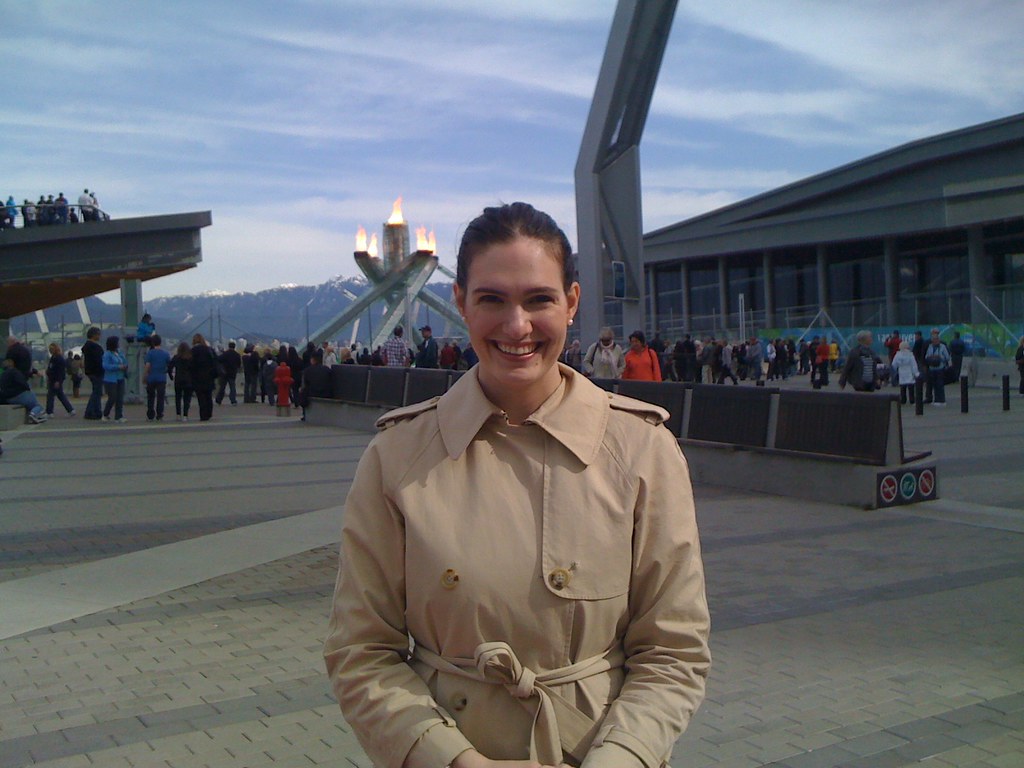
Last month my husband and I went to Vancouver with our daughter. We were only there for a few short days, but we had a wonderful time taking in the sights. Fortunately, the weather was fabulous, and we enjoyed walking around Stanley Park and the downtown area. We even made it for the final weekend of the  Olympic Winter Games, as you can see in the photo above (we actually didn't know that the Paralympic Games were still in progress when we arrived - it's sad they get so little press).

Although I'd spent lots of time in Vancouver back in my undergraduate days, it was quite a change to visit as a 'grown-up'! As a student, I spent most of my time in Vancouver shopping for bargains and eating crepes and pizza on the street (it felt sort of weird to go to sit-down restaurants). While we were planning our trip to the city, Javier asked me which places we should go to, and I couldn't really tell him anything! That's when I realized that even though I lived in Greater Vancouver for 5 years, I'd never really seen the city.


During a long walk through the downtown area, we passed by Vancouver's historic Marine Building. My husband and I kept commenting on how much the Art Deco style of the building reminded us of The Daily Planet from CW's Smallville. Of course, we later discovered that that's because it is The Daily Planet (on the TV show they make the building look taller via CGI and superimpose the Planet globe on top).
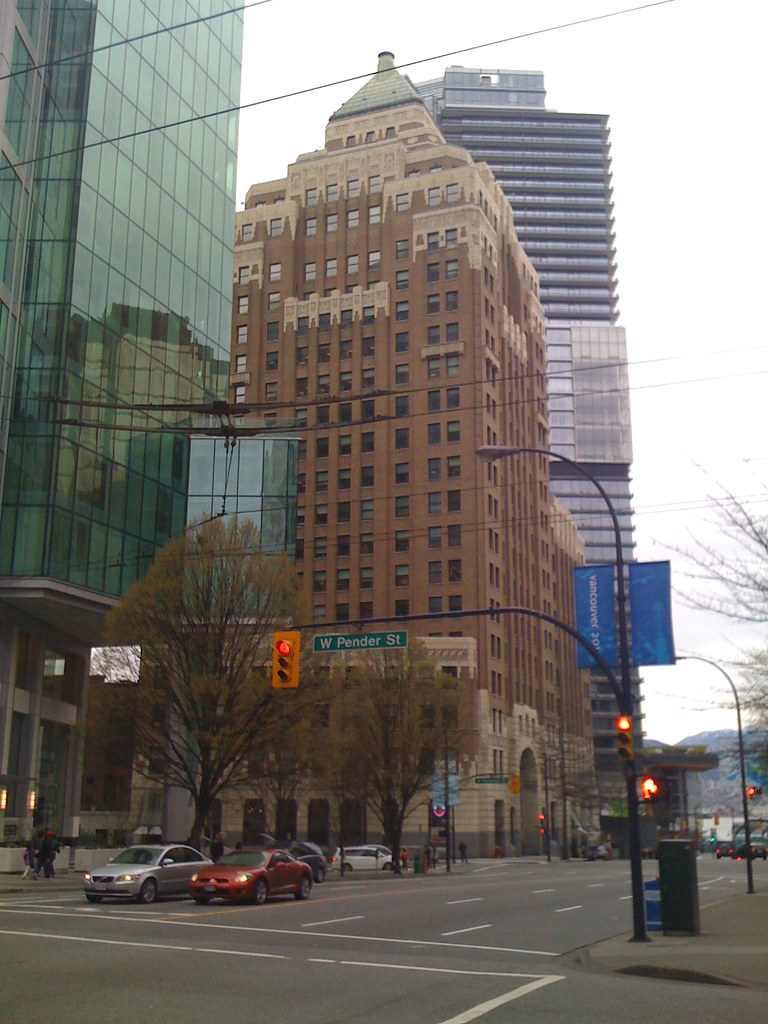

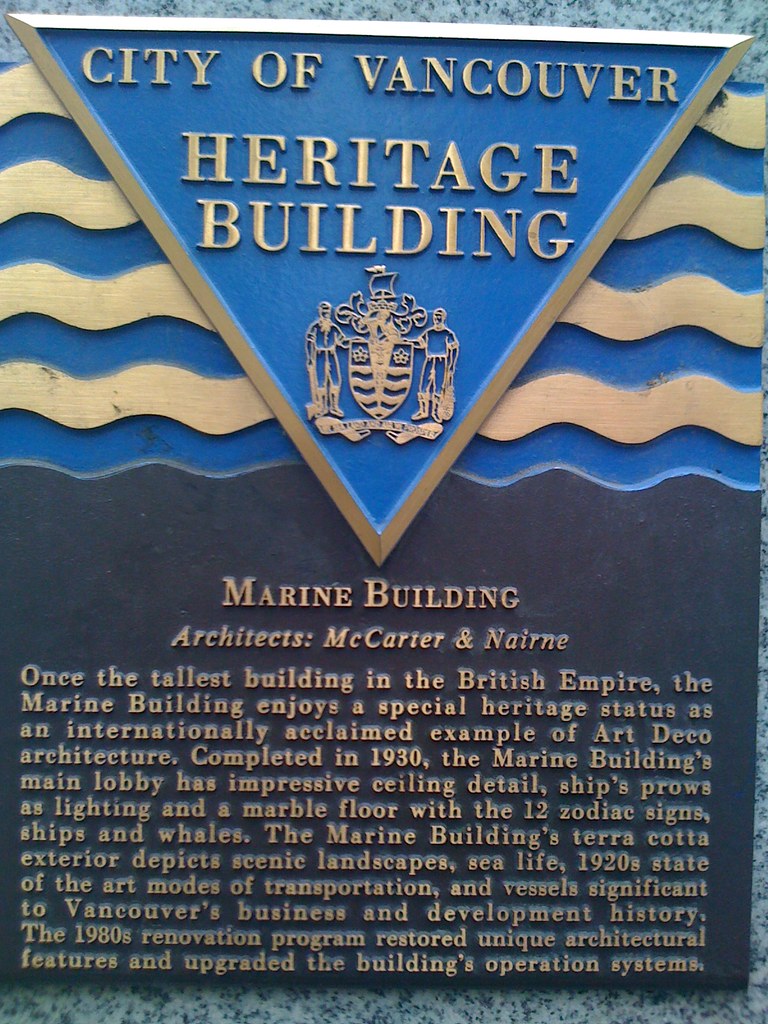
The Marine Building was completed in 1930 and is a beautiful example of Art Deco architecture. The building was designed by the Vancouver-based architecture firm of McCarter Nairne. John Y. McCarter (an engineer) and George C. Nairne (an architect) built two Art Deco skyscrapers for the city of Vancouver: the first was the Medical Dental Building, which was demolished in 1988, and the second was the Marine Building.

Interestingly, when the building opened, the city was in the throes of the Great Depression. Although the structure had cost over $2.3 million to build, it was sold to the Guinness family (yes, that Guinness family), for a mere $900,000. Such a deal!


My favourite feature of the building is the elaborate entrance, with its fabulous Art Deco details.
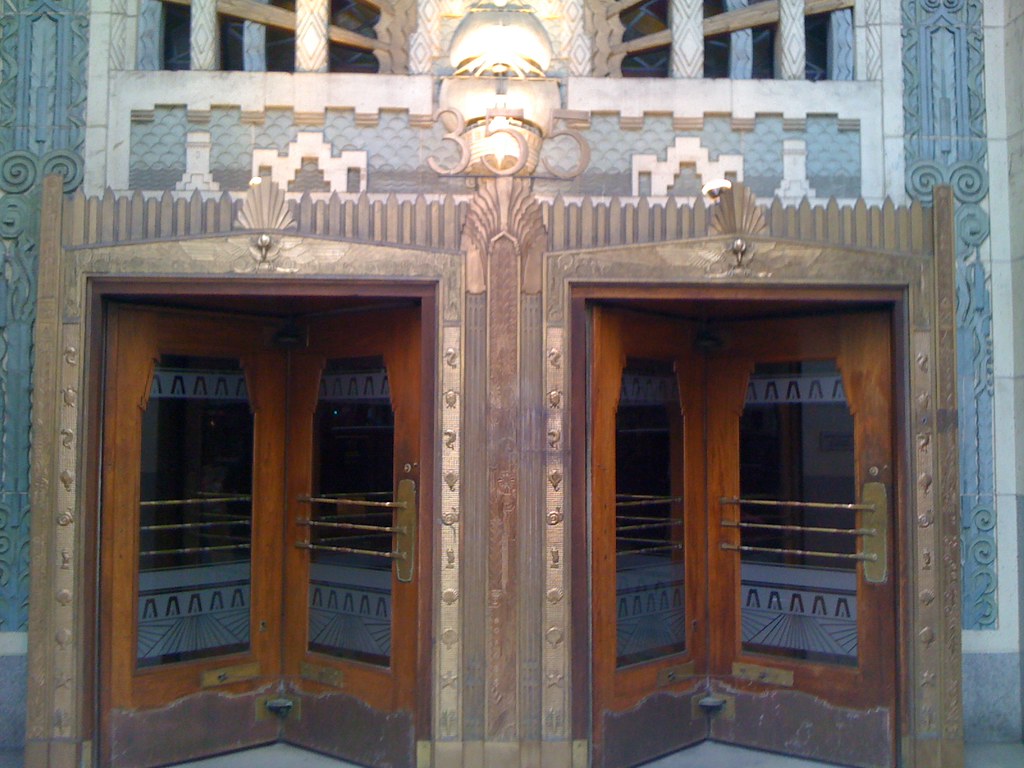

Below you can see the rest of the entrance (unfortunately I couldn't get the whole thing with my iPhone, so I had to take two separate shots!). Take a close look at those angelic winged creatures: they're Canadian Geese! I don't think I've ever seen Canadian Geese looking so regal.
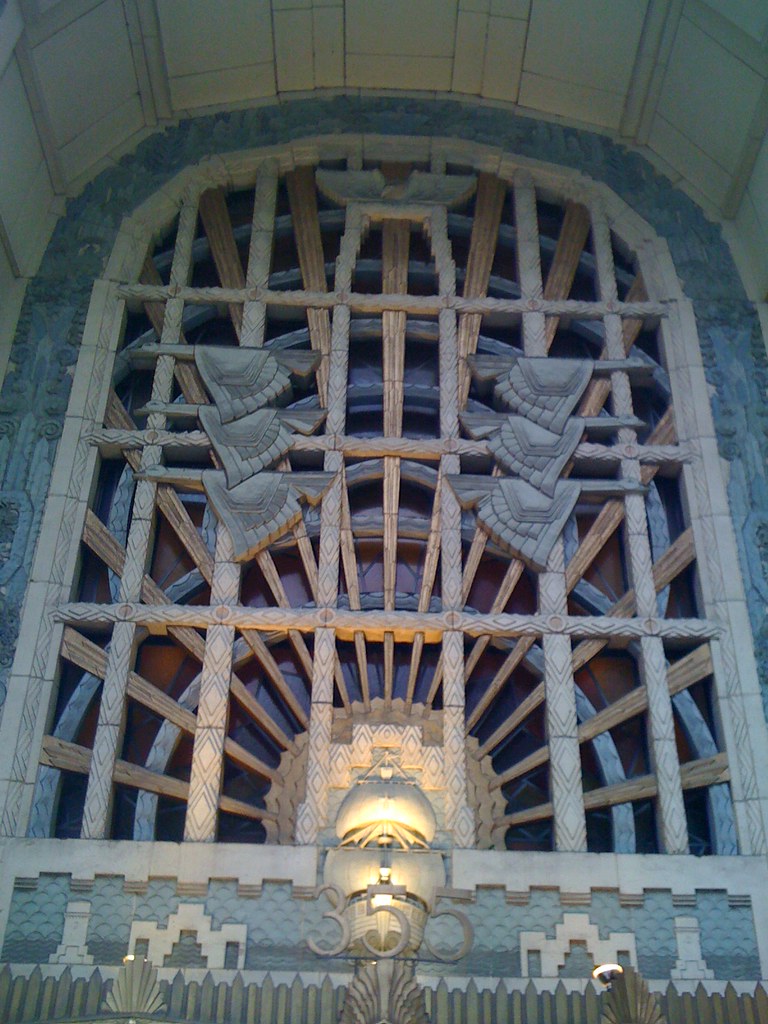

 It is certainly one of the prettiest buildings in downtown Vancouver, and I'm amazed I'd never visited it before. Now I really want to take a peek inside. I guess I'll have to wait till next time!

Friday, April 16, 2010

Edmonton Arena District

I'm a huge believer in mixed use development in urban centers. My husband and I live in Central Edmonton and we love being able to take advantage of proximity to work, shops, and the beautiful river valley. As a result, I'm very excited about the proposed Edmonton Arena District, a mixed development project that includes a new arena for the Edmonton Oilers, plus residential housing, a community rink, a new casino, retail space and a winter garden. The project is being led by the Katz Group.

The video below features Daryl Katz, owner of the Edmonton Oilers and chairman of the Katz Group. It's a very frank discussion of why a project like the Arena District is of vital importance in attracting investment to the city:


Mr. Katz has announced his intention to contribute $100 million to the project, but I immediately noticed that a lot of the comments on YouTube suggest Mr. Katz ought to pay for the entire arena himself. This sentiment is echoed on Edmonton City Councillor Don Iveson's blog, where Iveson contends that the city shouldn't have to borrow the $400 million needed to finance the project. This sort of attitude always seems to be on display when a business person suggests a project that would improve life in the city.

I'm originally from Washington State, and I still remember the public outcry over billionaire philanthropist Paul Allen's proposal to construct the Qwest arena. There were dozens of letters written to local papers complaining that Allen should pay for the arena himself, rather than "leaving taxpayers with the bill." Of course, today most people will recognize that Mr. Allen's work in Seattle has helped to ensure its continued status as a world class city.

Of course, it's not just the cost of the project that has some Edmontonians concerned. The project has been criticized by Edmonton architect Barry Johns, who is concerned about the proposed location of the Arena District and LRT (light rail transit) access. I absolutely understand his reservations. Currently, the area that can be described as the "core" of downtown Edmonton is just a few blocks in diameter, and the proposed building site for the arena is a few blocks away. Also, the LRT does not currently run to the proposed site.

I think the hurdles Johns mentions can be easily overcome, however. While I strongly feel that approval of the development should be contingent on the addition of the LRT station, I am much less concerned about the notion of "extending" the downtown area, because, after all, that is the entire aim of the project!

The debate surrounding who should pay for the Arena District reminds me of the classic children's tale, "The Little Red Hen." I'm sure you will recall this story from your childhood. In it, the Little Red Hen finds a grain of wheat and has the idea of planting it and using the wheat to make bread. She asks the other farm animals to help her at each stage of production (planting, harvesting, milling, baking), but no-one offers. Of course, in the end, they all want to help eat the bread. City development projects always seem to work that way. People grumble about the cost, but in the end, they don't seem to have a problem using the services they didn't want to pay for.

Edmonton has the potential of being a world class city, but this will take genuine commitment on the part of the city government, private citizens and businesses. The Edmonton Arena District is a fabulous idea that will  beautify our city and help combat urban sprawl. Edmonton desperately needs some world class architecture to set the city apart and to attract people and investment. The completion of the Alberta Art Gallery this winter was a great start, but we need to build on the momentum that is being created if Edmonton is going to be able to compete with cities like Calgary for investment dollars.

For more information, please visit the Edmonton Arena District website.

Friday, April 2, 2010

Anish Kapoor's Orbit - English Eiffel Tower?

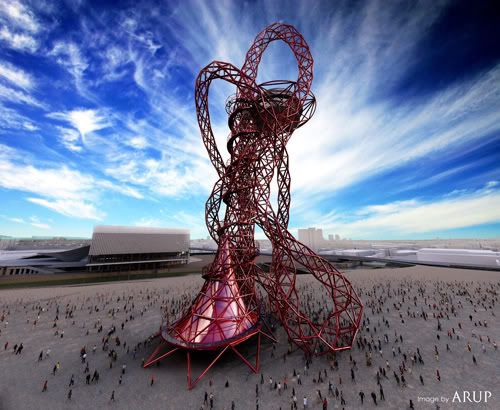
Anish Kapoor's design for the London Orbit Tower, intended to be the dominating structure of the London 2012 Olympic Games, was unveiled earlier this week.


When completed, the structure will stand over 115 meters tall - 22 meters higher than the Statue of Liberty, 19 meters higher than Big Ben, and considerably shy of the Eiffel Tower - the 340 meter high building to which the Orbit is already drawing comparisons.

Kapoor has created numerous well-known sculptures, including Chicago's Cloud Gate. Explaining his inspiration for the design, Kapoor remarked in an interview with the BBC that he wanted to "look again at the whole idea of a tower" replacing its traditional Cartesian lines with something more orbital, with a "flowing, coiling form". Moreover, he hopes "to create a sensation of a certain kind of instability' for the viewer.”

Mr. Kapoor, who admittedly has all the humility of Howard Roark, confesses that he makes art to please himself, although he has a viewer in mind. While statements like this have led some art critics to dismiss him as an egoist, I appreciate his honesty. Genuine humility would make innovation impossible. It requires a great deal of confidence to see one's work come to fruition, and I don't really see the point in artists pretending that their work is for the people. In fact, which is more arrogant: admitting that your work pleases you, or proudly asserting that it is meant please others?

For this reason, the Orbit/Eiffel Tower comparison actually works on a certain level. Much like the Orbit, the Eiffel Tower was an unapologetically modern structure that utilized revolutionary techniques in building construction. It was the tallest building in the world for 41 years, until the Chrysler building was completed in 1930. The Orbit does not attempt to compete with the Eiffel Tower in height (which would be rather pointless, since there many tall buildings). Nor does it have the concern with utility that dominated Gustave Eiffel’s work. Instead, Mr. Kapoor seems to feel that the next frontier in construction lies in manipulating the conceptual framework of structures like the tower. His plan for the Orbit puts a tremendous strain on the engineers involved, demanding a building that looks like it might topple over, but doesn't! Kapoor hopes that the innovations he has made in the Orbit's design will make it "truly 21st century."

The Orbit seems based on a visual conception of the relationship between man’s achievements and his limitations. The "leaning tower" can easily be interpreted to represent the instability of modern man. This is emphasized by the sinuous coils of the structure, which call to mind the tenuously twisted spirals of the DNA’s double helix. Of course, the entire structure appears to be on the verge of either collapse or ascent.

My biggest reservation about the project is its full name: the ArcelorMittal Orbit; so named after ArcelorMittal, the company which will be donating the structural steel required to complete the project (perhaps explaining the choice of building material?). I'm a bit disappointed with the red portion of the tower, which appears to be painted steel. How often the tower will need to be repainted? The Eiffel Tower was constructed out of cast iron, and has to be repainted every seven years to prevent corrosion (it takes about 60 tonnes of paint each time). Contemporary construction projects should be made greener by utilizing new materials that are more resistant to corrosion.

So, will the ArcelorMittal Orbit be London's landmark for the 21st century? I'm reserving judgement. People thought the Eiffel Tower was an eyesore when it first opened, so I know better than to criticize the Orbit based on its looks! That said, does the design have staying power? My answer would be yes, because I think that, upon completion, it will be the most prominent example of an honest contemporary architecture that at once embraces the technologies of the 21st century, while calling attention to a dominating sense of uncertainty about the future and our place within it.


Image courtesy ARUP/Getty Images, under fair use guidelines.

Friday, March 5, 2010

Ring House Nagano, Japan


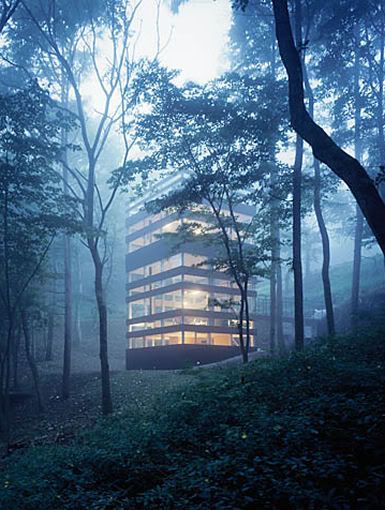
I ran across the Ring House, designed by Takei-Nabeshima-Architects (TNA) the other day, and was enchanted. This blog tends to focus on the history of the Arts and Crafts movement, but I'm always on the lookout for modern design that reflects the principles of beauty, simplicity and utility that the Arts and Crafts movement celebrated.

Just looking at this lovely home is relaxing! Created from rings of glass and wood, the Ring House was completed in 2006 and has a 360-degree view of the forest. Because of the rings of windows, you are able to look directly through the house from every side to the woods beyond.

In his writings, William Morris continuously emphasised the importance of creating new architecture that celebrated the best of the simple medieval aesthetic, while discouraging historical reproductions (faux gothic and the like). In the past, I've struggled with this particular aspect of Morris' writing. After all, we've all seen pretty terrible examples of contemporary architecture. I've often asked myself, why not just reproduce things from the past that were beautiful and useful? I'm slowly coming around to a different point of view, however. In my view, the Ring House is an example of how we can live in and celebrate contemporary architecture while respecting the best of design traditions.

For more information, please visit the TNA website. Photo by Daici Ano courtesy www.worldarchitecturenews.com

Tuesday, August 18, 2009

William Morris and Islamic Art

Journalist Navid Akhtar has taken an opportunity to examine the influence that Islamic design had on William Morris.

Akhtar argues that Morris' designs are "inextricably linked to the curving sinuous arabesques of traditional Islamic Art," pointing out the strong connection between Morris' work and Turkish ceramics and Persian carpets.

Akhtar goes on to argue that Morris was influenced, not only by the aesthetics of Islamic art, but by the principles that guided that art. He even suggests that Morris' famous decorating maxim "have nothing in your house that you do not know to be useful, or believe to be beautiful,"--is drawn from a saying in the Koran that "God is beautiful and loves beauty".

While this might be a bit of a stretch, it's undeniable that Morris and many of his friends in the Pre-Raphaelite Brotherhood were strongly influenced by Islamic design elements (particularly the repetition and symmetry that can be found in many middle-eastern art). Akhter suggests that many of the notions that Morris held dear--such as the importance of social consciousness, usefulness and beauty in every day objects-- were also common to Islamic art.

I think it was very important to Morris that these ideals were universal, but it's also interesting to see that a new generation of Muslim artists using Morris as artistic inspiration. What are your thoughts?

You can listen to the full radio broadcast at the BBC.

Monday, July 20, 2009

Prince Charles Declines to Renew his Patronage of the Society for the Protection of Ancient Buildings


His Royal Highness, Prince Charles, who has been patron of the Society for the Protection of Ancient Buildings (SPAB) since the death of the Queen Mother, has withdrawn his support after a difference of opinion with the members of the society's board. The Prince failed to renew his patronage of the society when it came up for renewal last year.

The Prince apparently raised the ire of the society by contradicting their stated views on restoration in a forward he wrote for a book on architecture. In the forward, the Prince argued that historical buildings should always be restored in their original style.

I can't help but feel that William Morris, who founded the society back in 1877, would have agreed wholeheartedly with the Prince on this particular matter. Morris was very much against reproduction of historical buildings, but was a strong supporter of historical preservation and protection. One only has to look at the "new designs" that Morris appreciated in order to realise that he was not quite as supportive of all forms of architectural innovation as the SPAB would have us believe. Morris found most modern design downright ugly, and I'm sure that he and the Prince would have agreed on that point.

While the SPAB's mandate might warn against "feeble and lifeless forgeries," it hardly seems fair that this should remain the chief concern for historical preservationists in this day and age, when we have much better access to appropriate materials for restoration. The danger of damaging the integrity of the historical architecture is far greater. However, it appears that the board of the society disagrees. They apparently requested that the Prince amend the forward to the book to more closely align with their own views and he refused.

It's surprising that the Society for the Protection of Ancient Buildings would actually refuse royal patronage from someone who happens to share views so similar to those of the society's founder. William Morris always felt it was disingenuous to try to imitate historical architecture, but he remained strongly convinced about the importance of preserving buildings as carefully as possible. I haven't seen the Prince's forward (and it sounds like none of us ever will), but it would be interesting to know what the fuss was all about. Besides, it seems that if Morris had seen some of the more atrocious examples of modern restoration, he might have agreed with the Prince even more! I guess I'm a bit of a Luddite, but I would prefer to err more on the side of cautious restoration than of reconstruction using new styles.

The SPAB has yet to name a new patron.

For more info on this story, see the Independent

The press release from the SPAB can be found on the Society's website

Image courtesy of Wikimedia commons.

Wednesday, May 13, 2009

Attacking Suburban Sprawl in Vauban, Germany

suburb

I always find it incredibly depressing to drive from Edmonton to Calgary. It's starting to look like one unending stream of suburbs. While there are still plenty of wide, open spaces, they get smaller every year and the suburbs of both cities just keep on growing. I'm starting to wonder how long it will take before the three-hour drive between the cities evolves into a hellish tour of one giant housing development after another.

It's shocking what a tremendous amount of space these homes take up. They seem huge, which is of course a large part of their appeal. But at the same time, they are so close together that you can look in your neighbours windows! Even our flat has more privacy than that! You have to wonder why people don't just give up the pretence and share a wall with their neighbors. But I guess that violates the whole "my McMansion is my castle" mentality.

It's also pretty hard to imagine the suburbs without cars, but that is just what they have done in Vauban, Germany. Vauban has decided to take a new approach to suburban planning, creating friendly neighborhoods with easy access to public transportation. Parking one's car on the street is discouraged. And although car ownership is not forbidden, it is a bit of a pain (there are only two places to park in the entire town). As a result, 70 percent of residents have chosen to give up their cars. People either carpool or take public transportation. And because driving isn't really an option, small stores that cater to the pedestrian population thrive.

In addition, free standing homes are forbidden in Vauban, helping to eliminate a lot of wasted space (honestly, who really hangs out in the two square feet of land that separates houses from each other in these new developments? And why do they even bother putting windows on that side of the house, since the only thing you can look at is your neighbors siding (and maybe your neighbors, if you're lucky).

I really hope that this idea takes off, though there are some definite drawbacks to car-free living(especially where I live). Cars are lifesavers during the long Edmonton winter. When it's -30 C (-22 F for the Americans), you don't really feel like walking much of anywhere. Even if they grocery store is pretty close. So I guess I can see why suburban parking lots are so popular here. Still, I'm sure that things can be done to make developments more pedestrian/public transportation/bike-friendly. Hmm. What would William Morris do?

Image courtesy of Wikipedia.

Monday, June 9, 2008

Society for the Protection of Ancient Buildings

The Society for the Protection of Ancient Buildings was originally founded in 1877 by William Morris and several leading members of the Pre-Raphaelite Brotherhood. Affectionately referred to by Morris and his pals as "Anti-Scrape," the society was founded with the goal of preventing England's ancient buildings from being destroyed in "restoration" projects.

The SPAB's work is guided by a number of principles, the chief of which is the maxim "repair, not restore." The Society believes that "age can confer a beauty of its own." Moreover, gentle signs of aging on a building "are qualities to care for, not blemishes to be eradicated." This philosophy has had a major influence on how many of us view historic preservation today.

The Society for the Protection of Ancient Building's emphasis on repairing--rather than restoring--buildings has gradually become the rule when it comes to architectural preservation. Most curators now adhere to the SPAB's philosophy of preserving the integrity of historical structures, but the SPAB's influence is not limited to academic circles. The society's legacy can also be seen in thee fact that many homeowners and lovers of antique objects have begun to prize preservation over restoration. Interestingly, if you're a fan of antique-appraisal shows like "Antiques Roadshow" you'll see that this approach now applies to antiques as well (furniture that displays it's original finish is always much more valuable).

Today, the SPAB has over 7,500 members and is active in educating homeowners about how to go about repairing their homes. They also provide advice on how to repair churches and other historical landmarks. Be sure to take a look at their website to find out more!

Thursday, April 24, 2008

Gothic Revival and Spirituality: John Henry Newman and AWN Pugin


Thank you for all of your comments on my France trip! I'll definitely be following your advice!

Before I move on to John Ruskin's interpretation of Gothic architecture, I'd like to spend a bit more time talking about the Medieval/Gothic revival of the early 19th century that Augustus Welby Pugin was such an important part of.

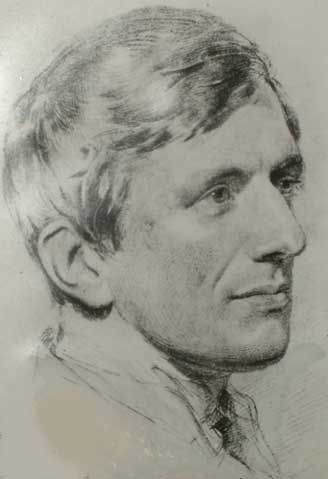
If you're a church history buff, you've probably heard of John Henry Newman (pictured right), the Anglican cleric who converted to Roman Catholicism after falling in love with the church's apostolic heritage (he later became a cardinal). Before his conversion, Newman was an extremely influential member of the Oxford Movement that aspired to return the Church of England to its Roman Catholic roots. Newman and Pugin were both heavily involved in a religious movement that idealized the Middle Ages for the spiritual awareness they believed the people of the time possessed.

During Pugin and Newman's time, Gothic Revival was closely connected to spiritual renewal, and a number of sermons were preached on the subject. Some portrayed Gothic architecture in a positive light, some did not. For example, a rather inflammatory address on Gothic Architecture entitled "The "Restoration of Churches" is the Restoration of Popery!" was given by Reverend Francis Close of Cheltenham in 1844(186).

When Newman decided to have the Chapel of St. Mary and St. Nicholas constructed in the Gothic style in 1835, it created a bit of a stir. This was prior to his conversion to Catholicism, but Newman was still a controversial figure. And while Newman did not join the Camden society--Pugin's circle of Gothic architects--he praised the style, and started his own group, the Oxford Society for Promoting the Study of Gothic Architecture (190).

Although Newman and Pugin were initially close friends, they ultimately had a falling out over (what else) the importance of Gothic architecture. Newman eventually came to beleive that, while Gothic architecture represented the perfect style for the Middle Ages, and that it should be preserved, it was not necessarily the best design for the 19th century (206). In the end, he rejected the notion that only one style could truly glorify God. This infuriated Pugin, who felt betrayed by Newman.

The lasting contribution of the early 19th century Gothic revivalists was their belief that one's moral and spiritual convictions are reflected (and informed!) by the work one produces. Augustus Welby Pugin wrote in defense of Gothic architecture that "the belief and manners of all people are embodied in the edifices they raised"(186). We will see that this sentiment had a powerful influence on the works of both William Morris and John Ruskin, although they would later re-interpret it in a more secular light. Morris himself saw Pugin's revival in Marxist terms: "the Gothic Revival was and is really connected with the general progress of the world, with...aspirations towards freedom"(206). In contrast, Pugin's desire was for the restoration of the Middle Ages, and through it "the star-gilt world that lived in his imagination"(206).

Source consulted: James Patrick, "Newman, Pugin and Gothic" Victorian Studies, Vol. 24, No. 2 (Winter, 1981): 185-207

Image courtesy wikimedia commons.

Monday, April 21, 2008

Gothic Revival in Architecture and Augustus Welby Pugin


The Gothic Revival in architecture was one of the cornerstones of the Pre-Raphaelite and Arts and Crafts movements. And while many people familiar with the Arts and Crafts movement associate Gothic Revival with Ruskin and Morris, Augustus Welby Pugin was actually England's leading exponent of Gothic Revival in the 19th century. It was Pugin's unique, moral and artistic interpretation of the medieval period that had the greatest influence on the Arts and Crafts Movement.

The other day we examined Horace Walpole's mini Gothic revival in the 18th century. Walpole did a great deal to re-popularize Medieval style, but he knew little about architecture and his "Gothick" mansion at Strawberry Hill was about as authentic as Cinderella's castle at Disney World. So while Walpole is considered by some to be the father of Gothic revival, it's a comparison somewhat akin to calling Marie Antoinette the mother of rural revival because she constructed a play village at Versailles.

It was not until the 19th century that a more heartfelt champion of Gothic style was born. Augustus Welby Pugin was born in 1812 in London in a family of exiled Gallic Aristocrats who had fled the French Revolution. The elder Pugin worked as a draftsman for the architect John Nash. His son exhibited a natural talent at drawing and his sketches were so popular that he was chosen to design furniture for Windsor Castle at the tender age of 19! Shortly thereafter, he went into business for himself.

Pugin was the polar opposite of Horace Walpole, whose interest in Gothic style was more for entertainment value. Pugin represented the new wave of Gothic revival in the 19th century, because he saw Medieval design elements as a moral force.

Pugin converted to Roman Catholicism in his adulthood, and his conversion experience motivated him to express his faith through architecture. Unlike Walpole, who toyed about with Gothic style as a plaything, Pugin idealized the Middle Ages for its intertwining of faith and beauty. In 1836, Pugin synthesised his thoughts about the moral superiority of the Middle Ages in a book entitled Contrasts, A Parallel between the Noble Edifices of the 14th and 15th centuries and Similar buildings of the Present Day. Showing a Decay of Taste .


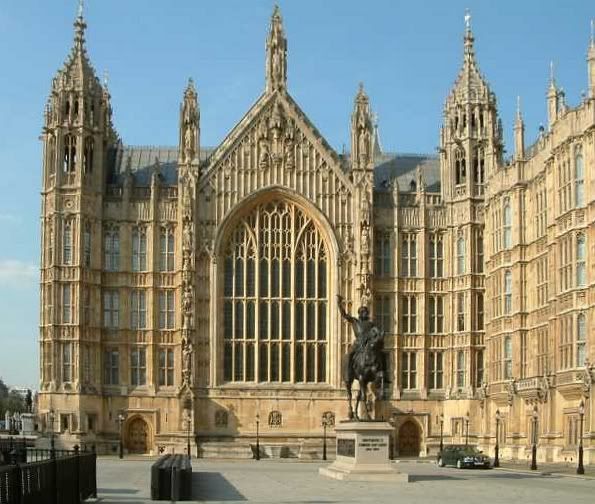
Pugin's writings struck a chord with his 19th century audience and he soon received a number of commissions. Pugin is best known for designing the interiors of the Palace of Westminster (Parliament, shown right) in London. His greatest contribution, though, was the way he recast the medieval as a moral force, something that inspired John Ruskin, and later William Morris.

Sadly, Pugin had a nervous breakdown while trying to prepare the Medieval exhibit for the Crystal Palace exhibition of 1851. He was institutionalized briefly, but was released to die at home in 1852.

For more information, see the Pugin Society. Sadly, I took a look at Project Gutenberg, and it doesn't look like any of his works are available online yet! This is a project for somebody! I would really love to read his books, and I'll definitely be posting a review once I do.

Friday, April 18, 2008

Horace Walpole, Strawberry Hill and Gothic Revival


The appeal of Gothic architecture was so strong that it couldn't stay buried for long. The first major Gothic revival began in 1740's in England. Horace Walpole, the eccentric 4th Earl of Orford, was one of the first to re popularize the style. Walpole is one of those fascinating characters who makes the study of history worthwhile. I do so enjoy a good yarn, and Horace Walpole's life and work make for as good a story as I have ever read. Walpole was the son of Prime Minister Robert Walpole and the cousin of the famed Lord Nelson. Horace was an incurable romantic, given to dramatic and aesthetic indulgence--a bit of an 18th century Oscar Wilde (except with better breeding). Horace was quite taken with the Medieval period from an early age and decided to construct his own castle in homage to Gothic architecture. His most famous contributions to history were his neo-Gothic castle, Strawberry Field, the world's first Gothic novel, The Castle of Otranto, and the drama-laden Goth catch-phrase: "This world is a comedy to those that think, a tragedy to those that feel."

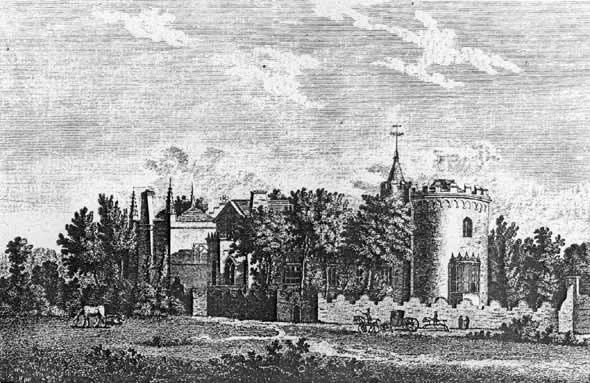
In 1747, Horace Walpole purchased a small villa near Twickenham. Together with a couple of friends, with whom he formed a "committee of taste," Walpole began working to transform the building into an estate, complete with an in-house printing press so that he could print his literary works! The resulting structure was christened Strawberry Hill. While Strawberry Hill is not an example of authentic Gothic architecture by any means, it helped inspire a movement to revive Gothic style.

Horace Walpole continued working on the house for the next 50 years. During that same time period he also wrote what is widely regarded as the first Gothic Novel, The Castle of Otranto, in 1764. He initially claimed that the novel had been discovered in the library of "an ancient Catholic family in the north of England." He also claimed that the original story dated back to the crusades. People didn't seem entirely convinced, so he eventually confessed that he had written it himself. His novel, in addition to his letters, are available here, courtesy of our friends at Project Gutenberg.

As we will see later, Horace Walpole's Gothic revival differed sharply from the revivals of the 19th century. Men like Pugin, Morris and Ruskin, admired Gothic style for its emphasis on natural beauty, whereas Walpole's revival is characterised by its extravagance and dedication to romance over nature. All of this raises an important question in my mind: both Morris and Walpole constructed anachronistic Gothic paradises for themselves (Morris at Red House and Walpole at Strawberry Hill). So was there any real difference between them? Leave a comment!

For more information on Strawberry Hill, visit Friends of Strawberry Hill, a site devoted to the preservation of Horace Walpole's project. They have some fabulous photos!

Further reading: I have gleaned some of the information in this post from a great article in Architectural History Vol. 38 (1995)entitled "Strawberry Hill: Building and Site" by Peter Guillery and Michael Snodin.
The 19th century woodcut of Strawberry Hill is courtesy of Wikimedia commons.

Thursday, April 17, 2008

Gothic Architecture

Gothic architecture and style was a major influence on the Pre-Raphaelites and the Arts and Crafts movement. For the next few days, I will be examining the history of Gothic architecture and style.

If the word "goth" conjures up images of depressed mall goth teenagers wearing too much eyeliner, it's time to re-educate yourself!

The Goths were a group of five eastern Germanic tribes after the demise of the Roman Empire. They were not architects, and have no relationship to Gothic style aside from the name.

Gothic architecture itself emerged in 12th century France and was originally called "French Style." It was the dominant style between the 12th and 16th centuries, but was later mocked by some as being "Gothic"(as in backward and barbarian). The Gothic style is characterized by mathmatic precision, symmetry and a desire to reflect the glory of God through awe-inspiring architecture.

Some of the most distinctive features of the Gothic style of architecture were the flying buttresses, used to support the height of the buildings, and pointed arches (which actually originated in Assyrian and Islamic architecture).


You can see examples of most of these features in the photo on the right. This was taken by yours truly in Summer of 2005. I miss Paris so much! Notre Dame is a great example of Gothic architecture. You can see numerous pointed arches in the photo, along with the flying buttresses that are supporting the weight and height of the building. The buttresses were essential to creating the lithe structure of the buildings, which look like fairy palaces in comparison to the heavier structure of Romanesque architecture.


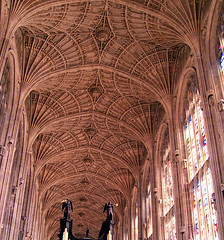
Moreover, as a result of the ribbed and vaulted ceilings they made use of, Gothic buildings were also significantly lighter and brighter inside than Romanesque structures (which is why it's kind of funny that we tend to associate anything "Gothic" with darkness). Gothic architecture was actually about creating light, bright places! This vaulted ceiling in King's College Chapel at Cambridge University illustrates the the power of the ribbed, vaulted ceiling. You can also tell from the windows on the right how this structure permitted architects to leave more room for windows. Kings College Chapel has one of the most famous and ornate vaulted ceilings in the world. I saw it in high school on a trip to England and I was absolutely dumbfounded. The sheer majesty of the architecture was breathtaking. The building was completed in 1515 under the reign of King Henry VIII.


A more detailed picture of the construction of flying buttresses can be seen below (thank you wikipedia commons!). As a side note, doesn't the very phrase "flying buttresses" sound terribly romantic? I seem to recall Anne of Green Gables saying something about them, but I can't quite remember it at the moment.

Sadly, in the wake of the Renaissance, the style police decided that Gothic architecture was abandoned. The powers that be wanted to return to a more classical style and they did for a while, but as we will see tomorrow, the enduring popularity of Gothic style led to its revival just a century later.

All images courtesy of Wikipedia Commons, save the photo of Notre Dame, which is mine!

For more information on Gothic Architecture, take a look at Yale University Press' fantastic new art history glossy, Gothic Architecture.