Friday, March 25, 2011

Call for Submissions for the April Issue of the Art History Carnival

Well, Spring is here (officially, anyway - we are still under snow here in Alberta) and it's time for the next issue of the Art History Carnival! The April Art History Carnival  will be posted on Tuesday, April 5, 2011. You can submit articles for inclusion in the carnival until 48 hours before the issue comes out (in this case, Sunday, April 3). 

What kind of blog articles will be included? 
Posts covering all periods and art mediums are welcome, as are posts discussing art criticism, architecture, design, theory and aesthetics. All submissions will be carefully reviewed. 

What is a Blog Carnival? 
According to Wikipedia, a blog carnival is "a type of blog event...similar to a magazine, in that it is dedicated to a particular topic, and is published on a regular schedule, often weekly or monthly. Each edition of a blog carnival is in the form of a blog article that contains permalinks links to other blog articles on the particular topic." 

Blog Carnivals are a great way to help your blog reach a new audience and to make new friends in the blogosphere! 

Who can submit? 
Anyone, as long as you have a blog! And If you don't blog, you can submit one of your friend's articles (except they better be good--I'll be reading them!). 

Can I host a carnival? 
Absolutely! Please let me know if you'd be interested in hosting the next issue of the carnival. 

How to submit articles
You have two options:

1. Use the submission form provided by Blog Carnival (this is easiest!). 
2. Send me an email. Include the title and permalink URL of the post you are nominating for inclusion in the carnival, along with the name of the blog. Please put "Art History Carnival" in the title of your email to help me recognize it in my inbox! 

One final thing to keep in mind: 
To keep things current, posts should have been written after the date of the last Carnival. If a post is six months old, I won't be able to include it in the Carnival, no matter how great it is.

Thank you for your participation! Share the news if you know someone who likes to write about art!

Friday, March 18, 2011

It's all about perspective...

It's fascinating how perceptions of art change over time.

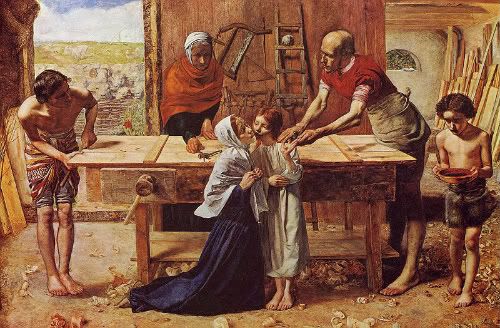
As you may recall, the Pre-Raphaelites were so named because they rejected the Royal Academy's unquestioning devotion to Raphael's style of painting. There is still some question as to whether the Pre-Raphaelites were primarily focused on rejecting Raphael himself (less likely), or whether they merely disdained the Academy's insistence that they ape the Rapahel-like style of painting. Either way, the Pre-Raphaelite Brotherhood rejected slavish devotion to the artistic heroes of the past, and Raphael was one of the most obvious targets.


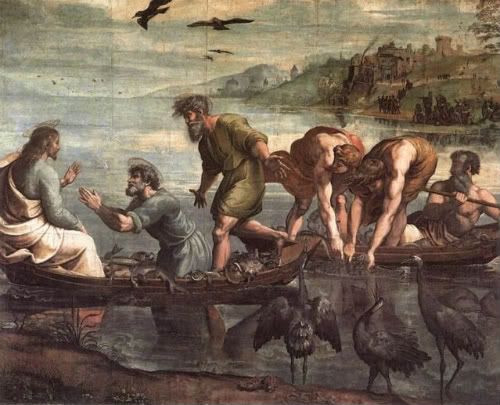
The Miraculous Draught of Fishes, 1515 is a perfect example of what irked the Pre-Raphaelites about Raphael. It is unquestionably a lovely work, but also seems a tad insincere. The subjects are posed in an unnatural way, and their grand gestures seem a bit overwrought, though you have to love the fellow on the far right who seems determined to show off his abs and bulging triceps. But on the other hand, Raphael's work was also dignified, beautiful and graceful, which is doubtless why the Academy used him as a standard example for their students.

Of course, it's ironic that one of the chief contemporary criticisms of the Pre-Raphaelites is that their work is chocolate-boxy and picture-perfect (the shoe is on the other foot now, eh?). I'm sure most members of the PRB would be stunned that their work, once so controversial, is now decried as downright twee (in the future will we look back on the work of the Young British Artists and think of their work as cute? That's a scary thought...).

Stimulating...or saccharine?

Over time, I have grown to appreciate (and often prefer) contemporary art, and although I still enjoy the work of the Pre-Raphaelites, I probably wouldn't display it in my home. From my perspective, the work of the PRB is an important part of art history that was very influential for generations of artists (whether they want to admit to it or not), and I love to study it. But I wouldn't like to see artists today imitating the style of the PRB or - for that matter - the style of any other artists or historical period.

What do you think? Would you like to see the artistic style from one of your favourite historical periods come back in fashion? Or do you prefer to keep the past in the past?

Wednesday, March 2, 2011

Artfinder.com

There has been a lot of exciting news over the past few months about art on the web. Google recently launched their Art Project, Twitter is teeming with artists, art lovers and art historians, and H Niyazi of Three Pipe Problem just launched the Art History Database, which permits visitors to search some of the best art and history sites on the web for relevant art-related content.

Yesterday, another exciting entrant launched the beta version of their site. Artfinder.com aims to connect visitors to new art through their website. Many of you are likely familiar with Pandora - the music service that automatically builds playlists for listeners based on their preferences. Artfinder.com aims to offer the ability do something similar, helping visitors discover new artists by using their "magic tour."

The magic tour works by showing you a set of four paintings, from which you choose your favorite (or you can skip the entire set if you don't like any of them).  This is done 3-4 times, after which a slide show is created based on your earlier choices.


The site mentions plans to develop applications for mobile and tablet devices, with the goal of sharing profits with the museums, galleries and artists featured on the site. Since there will be no cost to museums and galleries, this could be a really wonderful way for museums to increase revenues - especially when times are tough and arts funding is in so much jeopardy across the globe.

I was a bit disappointed that the website is weighted so heavily in the direction of pre-20th century art, although there are works by early 20th century artists like Matisse. Of course, as anyone who blogs knows all too well, it can be tough to get permission to show modern and contemporary works. This is a shame, but I hope things will change going forward. Obviously, Artfinder doesn't want to get slapped with a copyright suit their first day in business! Hopefully once artists (or their estates) are aware of the site, they will be willing to consider allowing their images to be displayed.

I really like the concept. The website has begun with 250,000 artworks, and you have the option to share paintings (right now it's just paintings and sketches, though they have said that they will be adding sculpture in the future) with friends through social media, such as Facebook and Twitter.

I was a bit disappointed with the magic tour, which is probably largely due to the fact that I am in a bit of a modern/contemporary art mood at the moment, and there is little of that on the website. So, I chose a few 19th century paintings. The results seemed a bit random, but I did find a few artists I was not familiar with. I liked most of what I saw, but I'm not sure if that was because of the accuracy of the "magic tour", or because I'm not that picky!

Overall, I think it's a great site and I'm very impressed with what Artfinder is trying to do. It's still in beta, so there are some wrinkles to be sorted out. However, I would definitely recommend it to readers of this blog, and I am very excited to see that art is alive and thriving in our web 2.0 world.

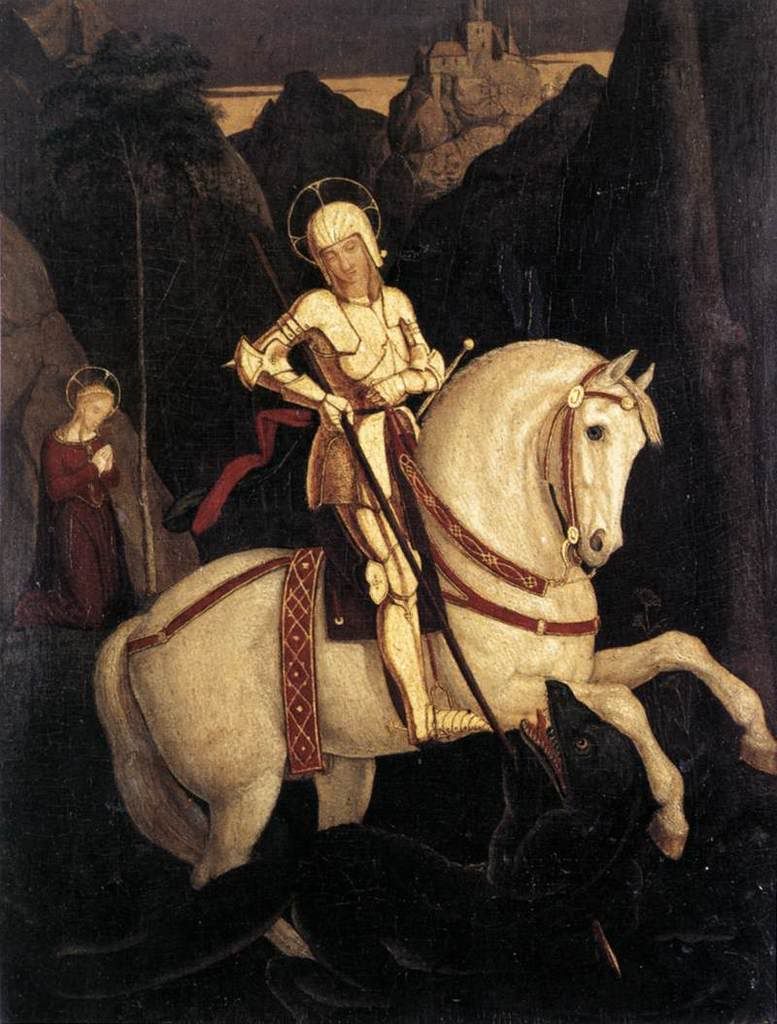
St. George and the Dragon, 1811 by Franz Pforr, Image courtesy Wikimedia

Monday, February 28, 2011

March Issue of the Art History Carnival to be Hosted at Three Pipe Problem

The March issue of the Art History Carnival will be hosted at Three Pipe Problem. The deadline for submissions will be Wednesday, March 2, 2011, with the selected entries being posted on Sunday March 6th 2011. If you would like to submit an article, you can do so directly through the submission form. My sincere thanks to Three Pipe Problem for hosting this issue, and I can't wait to see all the posts!

Tuesday, February 15, 2011

Ford Madox Brown Exhibit this Fall at Manchester Art Gallery


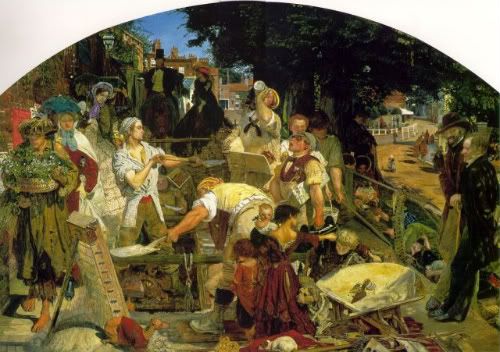
From Saturday, September 24, 2011 - Sunday, January 29, 2012, Manchester Art Gallery will be running a major exhibition of the works of Ford Madox Brown. Over 150 of Brown's works will be showcased, including well-known works such as Work (shown above) and The Last of England.

The exhibit will pay special attention to Brown's role in the Pre-Raphaelite movement and highlight his unique methods. Fans of the Arts and Crafts movement will be pleased that, in addition to his paintings, Brown's forays into furniture and stained glass will also be featured.

If you miss the Manchester venue, the Museum voor Schone Kunsten in Ghent, Belgium, will also be hosting the exhibit from February 25 - June 3, 2012.

Ford Madox Brown: Pre-Raphaelite Pioneer will be curated by Julian Treuherz, an independent art historian and curator who specializes in Victorian art.

The exhibit catalogue will be available both online and in the museum giftshop, so even if you can't make it to Manchester, you'll have the chance to experience it.

For more information, see the Manchester Art Gallery's website.

Image courtesy Wikimedia

Special thanks to Philip Ebbrell for bringing this to my attention!

Tuesday, February 1, 2011

Art History Carnival February 2011

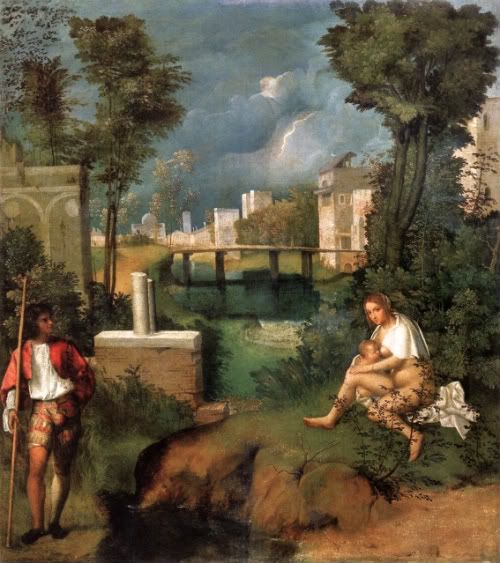
Welcome to the February 1, 2011 edition of art history carnival! Thank you to everyone who participated in this issue - there is some fabulous stuff here. We have everything from a reminder that artists - whether painters or film directors - tend to take liberties with the details of history, to a fascinating debate over the meaning and subject matter of Giorgione's The Tempest. So, pour yourself a cup of tea, and prepare to spend a while reading!

art history


Giorgione's The Tempest (seen above) seems to have captured the imagination of a number of art history bloggers this month, including Gina Collia-Suzuki. who raises a number of questions about the painting in her post The Tempest, by Giorgione posted at The Perplexed Palette.


But it doesn't end there! H Niyazi examines the painting from an historical perspective in his post, which explores the turbulent historical background of the early 1500s, and discusses its impact on some iconic works of Venetian Renaissance art, including Giorgione's 'Tempest' and Carpaccio's 'Portrait of a Knight'" in Giorgione, Carpaccio and the Siege of Padua posted at Three Pipe Problem


Have you ever heard of Hubert Van Eyck? I'm sorry to say that, prior to reading the following post, I hadn't! Hubert has been rather forgotten by the art world, thanks to the larger than life image of his brother Jan. Monica Bowen delves into the history of the Van Eyck brothers in Jan and Hubert Van Eyck: What I wish we knew posted at Alberti's Window.


Have you ever wondered why paintings of historical events include figures directly staring at the viewer? Monica Bowen looks to Renaissance scholar Leon Battista Alberti for the answer in historia paintings: here's looking at you, kid posted at Alberti's Window


David Packwood takes us on a journey into the Venetian Renaissance, and the work of Tintoretto, as recounted by the Pre-Raphaelite Brotherhood's talismanic advocate John Ruskin in Ruskin & Tintoretto posted at Art History Today


Dr. Frank DeStefano prefaces the work of John V. Fleming, exploring the sacred symbolism in Giovanni Bellini's 'St Francis in the Desert'" in his post entitled The sacred symbolism of Giovanni Bellini posted at Three Pipe Problem


Diana Flores presents her reaction to the Vietnam War Memorial in A Lacanian Intepretation of Maya Ying Lin's Vietnam War Memorial  posted at The Canon


One of the biggest challenges for art historians who researching female artists is that women's artwork has often been lost in the pages of history. Susan Benford helps remind us of the work done by one accomplished 17th century artist in Famous Painters: Judith Leyster posted at Famous Paintings Reviewed - An Art History Blog. Susan has also done a fascinating post featuring the work of portraitist Lavinia Fontana in Famous Paintings: Portrait of a Noblewoman posted at Famous Paintings Reviewed - An Art History Blog.


Vicky Alvear Shecter contemplates Jean Leon-Gerome's 'Pollice Verso' - the painting that inspired generations of historical film makers, and cemented a popular misconception about the 'thumbs down' gesture in gladiatorial combat - in Gladiators: Thumbs Up or Thumbs Down? posted at History with a Twist

art news


H Niyazi presents ModernARTization at the World Economic Forum posted at The Tait Global, saying, "The globetrotting Liv Tait spends some creative quality time with Damien Hirst and recounts the fascinating proceedings of the recent ModerARTization panel at the World Economic Forum."


exhibits


Natalie Bennett presents a post examining artifacts that have been left behind in history to remind us of the lives (and names) of women in Women in two Oxford museums posted at Philobiblon.


That concludes this edition. Submit your blog article to the next edition of
art history carnival
using our
carnival submission form.
Past posts and future hosts can be found on our

blog carnival index page
.


Technorati tags:

, .

Giorgione's The Tempest courtesy Wikimedia

Wednesday, January 26, 2011

Call for Submissions for the February Issue of the Art History Carnival

I hope 2011 has gotten off to a great start for everyone. I have been very busy so far this year (as some of you may have noticed from the lack of frequent postings), but hopefully things will start to slow down a little over the next couple of months and I will be able to get back to blogging!

The February Art History Carnival  will be posted on February 1, 2011. You can submit articles for inclusion in the carnival until 48 hours before the issue comes out (in this case, Sunday, January 30th). 

What kind of blog articles will be included? 
Posts covering all periods and art mediums are welcome, as are posts discussing art criticism, architecture, design, theory and aesthetics. All submissions will be carefully reviewed. 

What is a Blog Carnival? 
According to Wikipedia, a blog carnival is "a type of blog event...similar to a magazine, in that it is dedicated to a particular topic, and is published on a regular schedule, often weekly or monthly. Each edition of a blog carnival is in the form of a blog article that contains permalinks links to other blog articles on the particular topic." 

Blog Carnivals are a great way to help your blog reach a new audience and to make new friends in the blogosphere! 

Who can submit? 
Anyone, as long as you have a blog! And If you don't blog, you can submit one of your friend's articles (except they better be good--I'll be reading them!). 

Can I host a carnival? 
Absolutely! Please let me know if you'd be interested in hosting the next issue of the carnival. 

How to submit articles
You have two options:

1. Use the submission form provided by Blog Carnival (this is easiest!). 
2. Send me an email. Include the title and permalink URL of the post you are nominating for inclusion in the carnival, along with the name of the blog. Please put "Art History Carnival" in the title of your email to help me recognize it in my inbox! 

One final thing to keep in mind: 
To keep things current, posts should have been written after the date of the last Carnival. If a post is six months old, I won't be able to include it in the Carnival, no matter how great it is.

Thank you for your participation! Share the news if you know someone who likes to write about art!