Showing posts with label philosophy. Show all posts

Friday, March 18, 2011

It's all about perspective...

It's fascinating how perceptions of art change over time.

As you may recall, the Pre-Raphaelites were so named because they rejected the Royal Academy's unquestioning devotion to Raphael's style of painting. There is still some question as to whether the Pre-Raphaelites were primarily focused on rejecting Raphael himself (less likely), or whether they merely disdained the Academy's insistence that they ape the Rapahel-like style of painting. Either way, the Pre-Raphaelite Brotherhood rejected slavish devotion to the artistic heroes of the past, and Raphael was one of the most obvious targets.
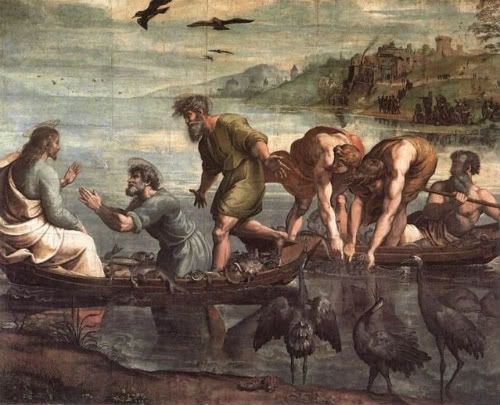

The Miraculous Draught of Fishes, 1515 is a perfect example of what irked the Pre-Raphaelites about Raphael. It is unquestionably a lovely work, but also seems a tad insincere. The subjects are posed in an unnatural way, and their grand gestures seem a bit overwrought, though you have to love the fellow on the far right who seems determined to show off his abs and bulging triceps. But on the other hand, Raphael's work was also dignified, beautiful and graceful, which is doubtless why the Academy used him as a standard example for their students.

Of course, it's ironic that one of the chief contemporary criticisms of the Pre-Raphaelites is that their work is chocolate-boxy and picture-perfect (the shoe is on the other foot now, eh?). I'm sure most members of the PRB would be stunned that their work, once so controversial, is now decried as downright twee (in the future will we look back on the work of the Young British Artists and think of their work as cute? That's a scary thought...).

Stimulating...or saccharine?
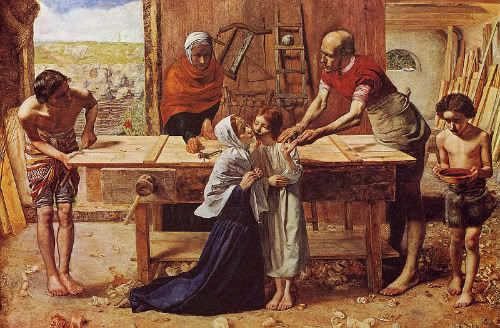
Over time, I have grown to appreciate (and often prefer) contemporary art, and although I still enjoy the work of the Pre-Raphaelites, I probably wouldn't display it in my home. From my perspective, the work of the PRB is an important part of art history that was very influential for generations of artists (whether they want to admit to it or not), and I love to study it. But I wouldn't like to see artists today imitating the style of the PRB or - for that matter - the style of any other artists or historical period.

What do you think? Would you like to see the artistic style from one of your favourite historical periods come back in fashion? Or do you prefer to keep the past in the past?

Thursday, September 18, 2008

What Makes a Pre-Raphaelite?

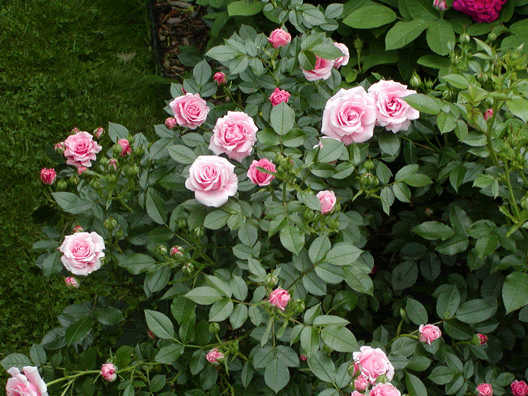
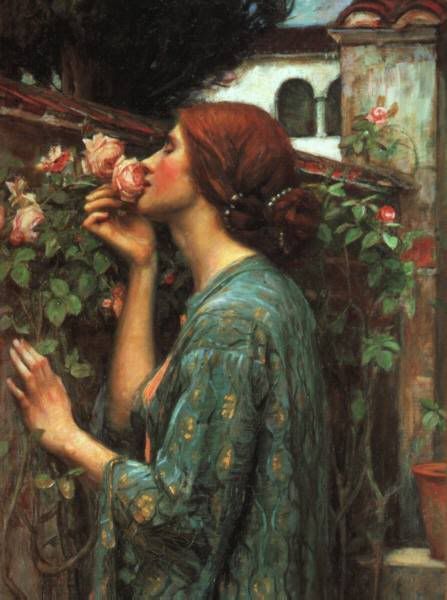
rose John William Waterhouse
The term Pre-Raphaelite is thrown around pretty loosely on this website. I liberally refer to Edward Burne-Jones and John William Waterhouse as Pre-Raphaelite artists, although I know perfectly well that they were not "officially" members of the brotherhood. For example, while many (including myself) would recognize Edward Burne Jones as a Pre-Raphaelite, his only connection to the movement was through Dante Gabriel Rossetti, and he was never a member of the original Brotherhood (neither, of course, was William Morris)(Barringer, 14).

This got me to thinking. What makes art Pre-Raphaelite? Why do I tend to associate some artists with the Pre-Raphaelite movement, and not others? In my own mind, Pre-Raphaelite art is closely connected to its 19th century British context, and so I tend to look for those qualities in any bit of fashion or art that I label "Pre-Raphaelite." I also think a certain dedication to accurate representation of life (realism) is another important defining characteristic of Pre-Raphalitism, though close examination of the art of the original Pre-Raphaelites' reveals that they wasn't always as keen on portraying "reality" as they were in finding beauty (this is particularly true of Rossetti, of course).

Pre-Raphaelites also had a very particular idea of beauty and nature that I think is common to most of the works I would consider "Pre-Raphaelite." I suppose most people would call this romanticism. The Pre-Raphaelite aesthetic values nature (or rather, an idealised form of nature), and generally opposes industrialisation and modernisation as encroachment onto nature's turf. This is particularly evident in William Morris' work and writing, but it can also be found in Rossetti's idealisation of untamed feminine beauty and Ruskin's fondness for the unspoilt landscapes of England and Scotland.

Finally, I would have to say historicism is probably the defining characteristic of Pre-Raphaelite art, and it connects closely to all the other attributes I've mentioned. It was certainly important to the original PRB--they even went so far as to name their movement "Pre-Raphaelite" in honour of a supposedly superior distant artistic past! And while it may seem quaint to modern viewers to see the obviously anachronistic characters that fill Pre-Raphaelite art, the Pre-Raphaelites felt that they were celebrating a mythical, mystical golden age.

What is Pre-Raphaelitism to you? I'd love to hear your thoughts.


Source consulted: Tim Barringer. The Pre-Raphaelites. London: Everyman Art Library, 1998.
Image: "The Soul of the Rose" John William Waterhouse, 1908. "And the soul of the rose went into my blood"(from Tennyson's 'Maud').

Saturday, May 10, 2008

Oscar Wilde on Ruskin


I've been an Oscar Wilde fan for as long as I can remember. I instantly fell in love with his flippant, irreverent humour. His quotable quotes are everywhere--I particularly love this one: "work is the curse of the drinking classes." So outrageous! How can you not love him?

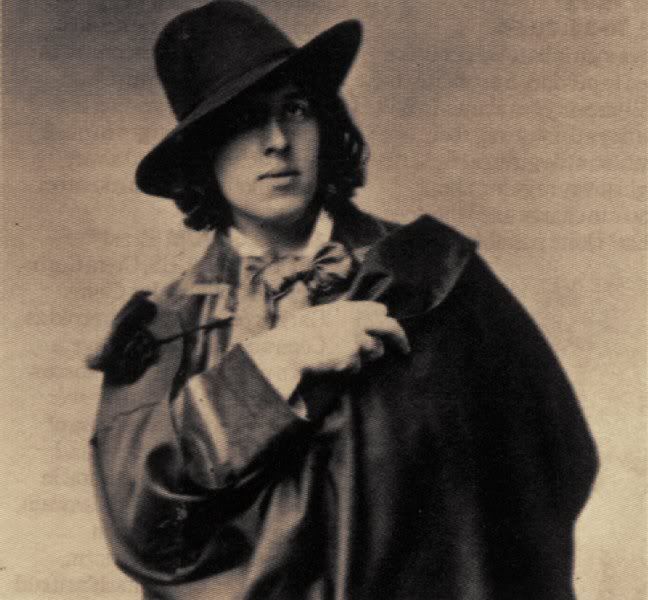
In addition to his witty sayings and flamboyant excesses, Oscar Wilde is also very well known for his involvement in the aesthetic movement (which partially explains his penchant for velvet kneebritches). But did you know that Oscar Wilde was also a huge fan of John Ruskin?

Ruskin (then Slade Professor of Fine Art at Oxford) was one of the two people that Wilde most wanted to meet when he went to Oxford. Wilde befriended Ruskin during his first year at school after going to Ruskin's lectures of Florentine Art in the fall of 1874. Soon Wilde was he even helped Ruskin to plant flowers while constructing a country road in North Hinksey outside of Oxford! For several months, Wilde got up early in the morning to wheel "Mr. Ruskin's especial wheelbarrow." I personally find it a little difficult to imagine Oscar Wilde pushing a wheelbarrow and digging ditches. He must have been truly eager to impress Ruskin! It paid off though...Ruskin invited the students who helped him with his project were invited to breakfast afterwards, and I'm sure Wilde took advantage of the opportunity to talk with Ruskin.

Ruskin's ideas left a lasting impression on Wilde, who rose to his defense in his work Intentions. His defense of Ruskin was later republished in the New York Times in 1891.

Who cares whether Mr. Ruskin's views on Turner are sound or not? What does it matter? That mighty and majestic prose of his so fervid and so fiery coloured in its noble eloquence, so rich in its symphonic music, so sure and certain, at its best in subtle choice of word and epithet, is at least as great a work of art as any of those sunsets that bleach or rot on their corrupted canvases in England's gallery; greater, indeed, one is apt to think at times, not merely because its equal beauty is more enduring, but on account of the fuller variety of its appeal, soul speaking to soul in those long-cadenced lines, not through form and colour alone, though through these, indeed, completely and without loss, but with intellectual and emotional utterance, with lofty passion and with loftier thought, with imaginative insight and with poetic aim; greater I think even as literature is the greater art.


Oh, Oscar.


sources consulted: "Noted with Pleasure" from the New York Times

Thursday, April 24, 2008

Gothic Revival and Spirituality: John Henry Newman and AWN Pugin


Thank you for all of your comments on my France trip! I'll definitely be following your advice!

Before I move on to John Ruskin's interpretation of Gothic architecture, I'd like to spend a bit more time talking about the Medieval/Gothic revival of the early 19th century that Augustus Welby Pugin was such an important part of.

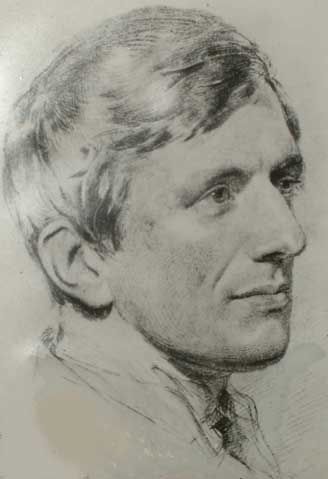
If you're a church history buff, you've probably heard of John Henry Newman (pictured right), the Anglican cleric who converted to Roman Catholicism after falling in love with the church's apostolic heritage (he later became a cardinal). Before his conversion, Newman was an extremely influential member of the Oxford Movement that aspired to return the Church of England to its Roman Catholic roots. Newman and Pugin were both heavily involved in a religious movement that idealized the Middle Ages for the spiritual awareness they believed the people of the time possessed.

During Pugin and Newman's time, Gothic Revival was closely connected to spiritual renewal, and a number of sermons were preached on the subject. Some portrayed Gothic architecture in a positive light, some did not. For example, a rather inflammatory address on Gothic Architecture entitled "The "Restoration of Churches" is the Restoration of Popery!" was given by Reverend Francis Close of Cheltenham in 1844(186).

When Newman decided to have the Chapel of St. Mary and St. Nicholas constructed in the Gothic style in 1835, it created a bit of a stir. This was prior to his conversion to Catholicism, but Newman was still a controversial figure. And while Newman did not join the Camden society--Pugin's circle of Gothic architects--he praised the style, and started his own group, the Oxford Society for Promoting the Study of Gothic Architecture (190).

Although Newman and Pugin were initially close friends, they ultimately had a falling out over (what else) the importance of Gothic architecture. Newman eventually came to beleive that, while Gothic architecture represented the perfect style for the Middle Ages, and that it should be preserved, it was not necessarily the best design for the 19th century (206). In the end, he rejected the notion that only one style could truly glorify God. This infuriated Pugin, who felt betrayed by Newman.

The lasting contribution of the early 19th century Gothic revivalists was their belief that one's moral and spiritual convictions are reflected (and informed!) by the work one produces. Augustus Welby Pugin wrote in defense of Gothic architecture that "the belief and manners of all people are embodied in the edifices they raised"(186). We will see that this sentiment had a powerful influence on the works of both William Morris and John Ruskin, although they would later re-interpret it in a more secular light. Morris himself saw Pugin's revival in Marxist terms: "the Gothic Revival was and is really connected with the general progress of the world, with...aspirations towards freedom"(206). In contrast, Pugin's desire was for the restoration of the Middle Ages, and through it "the star-gilt world that lived in his imagination"(206).

Source consulted: James Patrick, "Newman, Pugin and Gothic" Victorian Studies, Vol. 24, No. 2 (Winter, 1981): 185-207

Image courtesy wikimedia commons.

Monday, April 21, 2008

Gothic Revival in Architecture and Augustus Welby Pugin


The Gothic Revival in architecture was one of the cornerstones of the Pre-Raphaelite and Arts and Crafts movements. And while many people familiar with the Arts and Crafts movement associate Gothic Revival with Ruskin and Morris, Augustus Welby Pugin was actually England's leading exponent of Gothic Revival in the 19th century. It was Pugin's unique, moral and artistic interpretation of the medieval period that had the greatest influence on the Arts and Crafts Movement.

The other day we examined Horace Walpole's mini Gothic revival in the 18th century. Walpole did a great deal to re-popularize Medieval style, but he knew little about architecture and his "Gothick" mansion at Strawberry Hill was about as authentic as Cinderella's castle at Disney World. So while Walpole is considered by some to be the father of Gothic revival, it's a comparison somewhat akin to calling Marie Antoinette the mother of rural revival because she constructed a play village at Versailles.

It was not until the 19th century that a more heartfelt champion of Gothic style was born. Augustus Welby Pugin was born in 1812 in London in a family of exiled Gallic Aristocrats who had fled the French Revolution. The elder Pugin worked as a draftsman for the architect John Nash. His son exhibited a natural talent at drawing and his sketches were so popular that he was chosen to design furniture for Windsor Castle at the tender age of 19! Shortly thereafter, he went into business for himself.

Pugin was the polar opposite of Horace Walpole, whose interest in Gothic style was more for entertainment value. Pugin represented the new wave of Gothic revival in the 19th century, because he saw Medieval design elements as a moral force.

Pugin converted to Roman Catholicism in his adulthood, and his conversion experience motivated him to express his faith through architecture. Unlike Walpole, who toyed about with Gothic style as a plaything, Pugin idealized the Middle Ages for its intertwining of faith and beauty. In 1836, Pugin synthesised his thoughts about the moral superiority of the Middle Ages in a book entitled Contrasts, A Parallel between the Noble Edifices of the 14th and 15th centuries and Similar buildings of the Present Day. Showing a Decay of Taste .


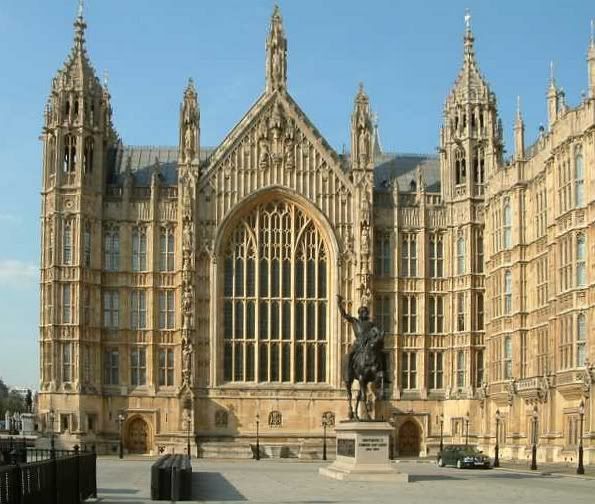
Pugin's writings struck a chord with his 19th century audience and he soon received a number of commissions. Pugin is best known for designing the interiors of the Palace of Westminster (Parliament, shown right) in London. His greatest contribution, though, was the way he recast the medieval as a moral force, something that inspired John Ruskin, and later William Morris.

Sadly, Pugin had a nervous breakdown while trying to prepare the Medieval exhibit for the Crystal Palace exhibition of 1851. He was institutionalized briefly, but was released to die at home in 1852.

For more information, see the Pugin Society. Sadly, I took a look at Project Gutenberg, and it doesn't look like any of his works are available online yet! This is a project for somebody! I would really love to read his books, and I'll definitely be posting a review once I do.

Wednesday, March 26, 2008

Wren and Willow Interior Decorating and Design


Flipping through the pages of magazines like House and Garden and Architectural Diegest, I'm always disappointed at the showiness and general disposability of most home decor. If you watch decorators on the House and Garden network, it always seems people use a designer to help them apply the latest trends in decorating to their homes. Then twenty years later (often less), their homes are outdated and again require the services of an interior decorator. The whole process seems to me to be incredibly wasteful, and it's made me rather hesitant to encourage the idea of using an designer.

Well, I am happy to report that not all designers are there to encourage you to buy into flash-in-the-pan decorating trends!

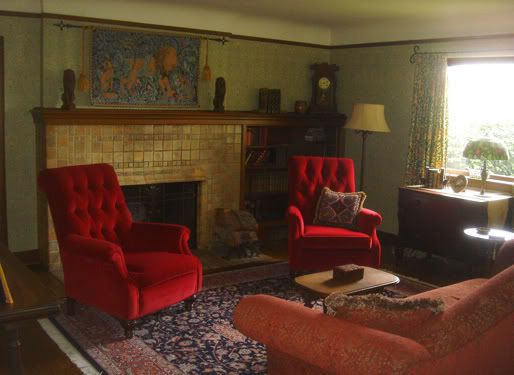
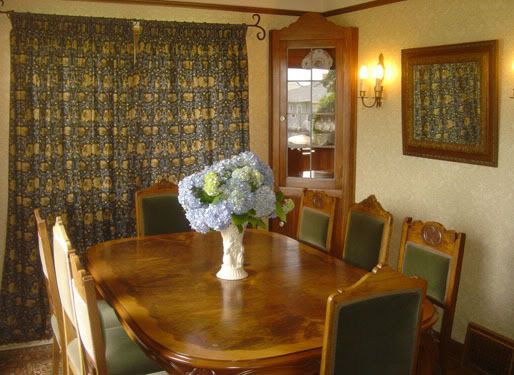
Yesterday I heard about this wonderful site from a highschool friend. Wren and Willow Interior Decorating and Design is a small interior design firm inspired by the William Morris maxim "Have nothing in your houses you do not know to be useful, or believe to be beautiful." The company's design projects have a decidedly Arts and Crafts flair, and promise to complement your home's architecture while "bringing the beauty of nature inside the home" to "create a warm and inviting atmosphere."

I must say, I'm blown away by the use of these beautiful William Morris wallpapers and textiles. I particularly love the living room, where they're using "willow" wallpaper, "honeysuckle" curtains and the lion above the fireplace is of course from William Morris' Forest Tapestry. The tiling around the fireplace is also lovely. What a beautiful retreat! And the beautiful decor in these homes is timeless. If you love something, why not keep it forever?

Monday, March 24, 2008

C.S. Lewis on Technology and Natural Law

"What we call Man's power over Nature turns out to be a power exercised by some men over other men with Nature as its instrument."--C.S. Lewis in The Abolition of Man

It's no secret that I love technology. I got my first computer back in University and I've hardly looked back since. Email is an indispensable tool. Without Facebook I would never be able to keep in touch with a lot of my friends. I love my ipod too! I wonder how I ever survived riding public transport without it.

Nevertheless, despite my abiding affection for the convenience of technology, I believe it raises serious concerns. I am not prepared to go as far as William Morris, who would have preferred to revert to as technology-free a world as possible. For one thing, even the stone-age utopia described in News from Nowhere includes technological innovations, however basic. Similarly, while I respect the Amish and way of life, I don't think it's possible to draw a line in the sand that will determine at which point technology becomes unacceptable (should we draw the line at electricity? Steam engines?). And I don't think that fleeing from the problem helps us address the root of the problem.

The problem with technology is, as Lewis points out in Abolition of Man, that “each new power won by man is a power over man as well.” For every benefit gained through new technologies, there is a price paid to those in power. For example, Facebook brings us closer to old friends, but this benefit often comes at the cost of our privacy (if you haven't heard of Beacon yet, give it a google--oh, wait a minute...that just feeds the system!). As Nicholas Carr has pointed out, the web is, at best, amoral. The reality of "man's power over man" in the world of technology is terrifyingly obvious. And short of homesteading in Alaska or Northern Canada (minus my blog, of course) it's impossible to escape. So what's a girl to do? Since I'm not about to give up my laptop, ipod or Facebook, I guess I'll have to think of another way to come to terms with my consumption of technology.

Back to C.S. Lewis. In The Abolition of Man, Lewis addresses the soul-sucking status of modern education. As Lewis wrote this series of lectures during World War Two, modern educators were busy trying training schoolchildren to see a world stripped of all the emotions and sentiments that might cloud their judgement--to a see a world beyond good and evil where costs and benefits were the ultimate measure of success. If we teach children moral relativity, we shouldn't be surprised when, Zuckerberg-like, they grow up to invent technologies that spy on us for their own financial gain. In this sense, I would have to pinpoint our liberal democratic educational system as the root of most of our problems as a society, including our runaway technologies. By positing self-interest as the highest good and permitting moral relativism, they promote dangerous narcissism.

What was Lewis' prescription for the self-interest that represents the malaise of modernity? The Tao, or Natural Law. The Tao is the law in our hearts. It is "the doctrine of objective value" "the belief that certain attitudes are really true, and others really false, to the kind of thing the universe is and the kind of things we are" (Lewis). Although the notion of the Tao might seem a bit quaint to those of us reared in the school of scientific materialism, it has a lasting appeal that is difficult to escape.

For Lewis, knowledge of the good is the beginning of critical thinking. Before we can properly engage in the modern world, we need to know what is true, good, and beautiful and be able to recognize it when we see it.

Our society has exchanged the mysteries of creation (man’s humanity, in particular) for knowledge about their quantitative processes. This doesn't mean that we as a society need to reject innovations and attempt to return to a pre-modern way of life. It means that there is value in retaining moral absolutes. Moreover, it means that we as a society need to return to reverence for the value, not only of creation itself, but also of humanity itself. Technological innovations need to be evaluated in terms of their continuity with the law that is written on our hearts and be used in a way that does not violate that law.

Friday, March 21, 2008

The Beautiful and the True

"When public taste seems plunging deeper into degradation day by day, and when the press universally exerts such power as it possesses to direct the feeling of the nation more completely to all that is theatrical, affected, and false in art...it becomes the imperative duty of all who have any perception of knowledge of what is really great in art, and any desire for its advancement in England, to come fearlessly forward, regardless of such individual interests as are likely to be injured by the the knowledge of what is good and right, to declare and demonstrate, wherever they exist, the essence and the authority of the Beautiful and the True." (John Ruskin, Modern Painters I., 3.4).

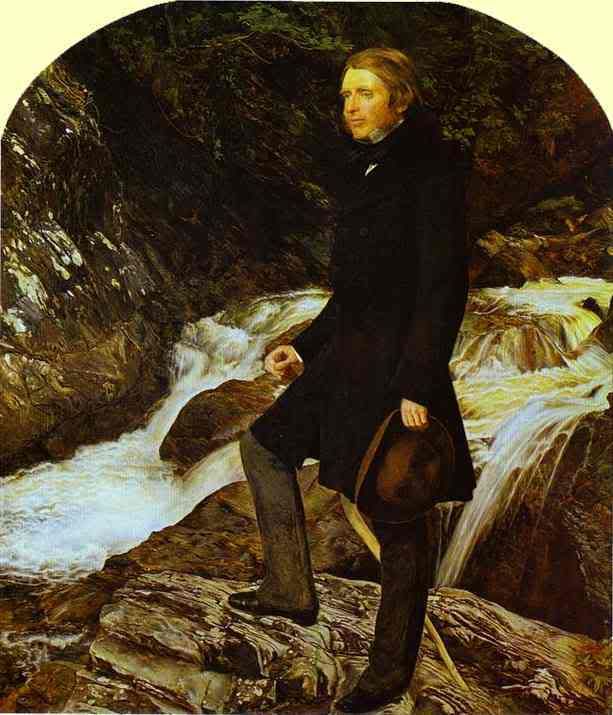
John Ruskin made this statement in May 1843, when he was just 24 years old. By the time of his death in January, 1900, his call for a return to "the Beautiful and the True" had come to represent one of the formative statements of the Victorian age.

Now here's a ribald tidbit: The Painting of Ruskin is by John Everett Millais, who had an affair with Ruskin's wife Effie shortly after completing this portrait. Effie later had her marriage annuled on the grounds that John Ruskin was "incapable of conusmmating" their marriage "by reason of incurable impotency." Effie and Millais were married one year later. Oddly enough, in keeping with the Pre-Raphaelite tradition of Rossetti and Morris, Millais and Ruskin remained friends!

Tuesday, March 18, 2008

Voluntary Simplicity


I've been thinking about voluntary simplicity a lot for the past couple of days, except I wasn't aware of an actual movement. It started with a conversation my husband and I had about "affluenza." We both love beautiful things and want a lovely home, but we feel strongly that living in debt is too high a price to pay. We want to be debt-free and feel that this is one of the greatest gifts we can give our kids. After all, money is one of the biggest issues in most marriages, so why live beyond our means when we know it's one of the leading causes of marital strife?

Later, I came across the idea again while doing research for my other blog, Greener Chic. After writing about Tasha Tudor's simple lifestyle, I decided to poke around and see what grassroots movements existed that seemed similar.

After looking around, I found the book Your Money or Your Life . I think I'm going to get the book! The whole idea was reminiscent of William Morris' News from Nowhere, so I did a google search on the Arts and Crafts Movement and voluntary simplicity and came across this post by my friend Paula at The Beautiful Life! Great minds think alike, I guess!

There's nothing new under the sun, and "Voluntary Simplicity" is of course just a new name for a very old idea. Living simply has been advocated by many people throughout history, at least as far back as Jesus Christ himself.

I love Morris' vision of a more simple future, where people embrace a less complex existence:

"There were houses about, some on the road, some amongst the fields with pleasant lanes leading down to them, and each surrounded by a teeming garden. They were all pretty in design, and as solid as might be, but countrified in appearance, like yeomen's dwellings; some of them of red brick like those by the river, but more of timber and plaster, which were by the necessity of their construction so like medieval houses of the same materials that I fairly felt as if I were alive in the fourteenth century; a sensation helped out by the costume of the people that we met or passed, in whose dress there was nothing "modern"."--News from Nowhere

I'm not sure if Morris' vision of the future will ever come to pass, but it would be nice! Especially when I look around my city and see cardboard McMansions going up in droves.

Thursday, February 28, 2008

The Pre-Raphaeilte Brotherhood's Attraction to the Medieval


One of my favourite aspects of Pre-Raphaelite art is its devotion to Medieval-inspired subjects, like the Knights of the Round Table. But interestingly, the Pre-Raphaelites were initially attracted as much to the way medieval artists painted as they were to the subjects they covered.

The Pre-Raphaelite movement began in 1848, when a goup of young artists decided to take on the conventions of the London art world. Dante Gabriel Rossetti, William Holman Hunt and John Everett Millais were the founding members of the brotherhood, which met regularly to discuss art. They shared a mutual distaste for the art of Raphael, Titian and the artists of the Renaissance.

Their least favoutite modern was Sir Joshua Reynolds (referred to as "Sir Sloshua," by Millais and Hunt, who felt his brushwork was lacking). Sir Joshua Reynolds was the first president of the Royal Academy and had established the academy's "rules" for painting based on the conventions of neo-Classical and late Renaissance art. He decreed that "subjects should be edifying, colors subdued, compositions either pyramidal or S-shaped"(Stewart), and so on.

The Pre-Raphaelites rejected the idea that art should be so formulaic. Subdued colours and pyramidal compositions were not natural and thus untrue--something that bothered them. In response they sought to turn to medieval or "primitive" art for inspiration, believing it to be more realistic, detailed and authentic. They did face some problems with this, however.

Since very few examples of medieval art remained, even in their own time, they had to frequently resort to using their imaginations. In order to access the Medieval, the artists turned to early literature for inspiration, most often using the Bible, Chaucer, and the tales of King Arthur. They also used the poetry of John Keats and Alfred Tennyson. This earned them a great deal of criticism from their contemporaries, who charged them with "idealizing the Middle Ages" (this same criticism is still launched at them today). William Morris made it quite clear in his writings that he in no way sought to return to the Middle Ages or to replicate Medieval art. Instead, he hoped to revive the spirit of the age, which he felt was more sincere and less artifical than that of his own time.

The Pre-Raphaelites' obsession with the Medieval grew with time and qualifies the Pre-Raphaelites as one of the last chapters in the Romantic movement. I will discuss Romanticism and the Pre-Raphaelites soon!

Source: Doug Stewart, "Incurably Romantic," Smithsonian, Feb2007, Vol. 37 Issue 11, p86-94.

Thursday, February 21, 2008

William Robinson and the Wild Garden


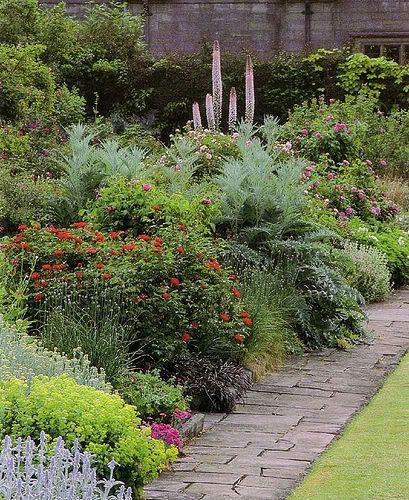
William Robinson (1838-1935) did for the garden what William Morris did for interior design. The "wild garden" movement he started was so successful that many today do not realize the English Cottage Gardens they admire today are largely the result of Robinson's dedication to traditional gardening practices.

Born in Ireland in 1838, Wiliam Robinson took a fancy to gardening from an early age, and by 21 he was in charge of many greenhouses. The story goes that one day, the fires keeping the greenhouses warm burned out and the plants died. Robinson was discharged (Massingham, 61). Although he quickly found employment with the Royal Botanic Garden, Robinson had developed a dislike for hothouses that lasted him the rest of his adult life.

In the introduction to The Wild Garden, Robinson describes arriving in London just as the Royal Horticultural Society's Garden at Kensington was being constructed and the Crystal Palace was being landscaped. He commented that it was like "all the theatrical gardening Versailles reproduced in Surrey"(62). He found the repetitive patterns rather boring and complained that this "false and hideous art" had acheived such popularity that "all but the poorest cottage gardens" were following suit (62). Robinson was just beginning to discover the beauty of England's wildflowers and trees and he decided to make "wild gardens" his life's work. Over the next few years, Robinson toured France, Italy and the United States observing different gardening styles.

In 1871, Robinson founded his own gardening journal, called "The Garden." The premier issue contained articles by the likes of Oliver Wendell Holmes and John Ruskin, who remained a frequent contributor to the magazine (William Morris himself also wrote for The Garden). Robinson was an avid reader of Ruskin's work and it shows in his design philosophy.

Robinson's most famous contribution to gardening was his book The English Flower Garden, which he published in 1883. He encouraged his readers to aim for a less strictly structured garden, arguing that "the best kind of garden grows out of the situation, as the primrose grows out a cool bank"(69). While Robinson favoured "wild" gardens, he felt that grouping flowers together in an artful way was important. The greatest contribution of the book was probably the introduction of the "herbaceous border" which most gardeners are quite familiar with.

In 1884, the success of Robinson's gardening journal and his book had made him enough money that he was able to purchase Gravetye Manor, a beautiful Elizabethan home on several hundred acres near East Grinstead, Sussex. The only work he did on the house was to change the fireplace back to a wood burning one--Robinson hated coal, a symbol of industrialization--and refused to have it burnt in his home. The rest of his energies he devoted to transforming the gardens into a wild English paradise. He kept a diary of his plantings, which is published under the title Gravetye Manor, or Twenty Years of the Work round an Old Manor House. Today, Gravetye Manor is considered one of the most beautiful examples of the gardens of the Arts and Crafts Movement.

When William Robinson appeared on the scene, the Victorian obsession with patterned gardens was at its height. He championed the informal, or "wild" garden at a time when almost everyone saw formal, patterned gardens, populated with hothouse flowers as the most beautiful. William Robinson was ahead of his time. He couldn't have even known the full importance of preserving the heterogeneity of English horticulture at the time he wrote his books. His instinct to preserve native plants likely saved a large number of wildflowers from extinction. Like Morris and Ruskin, he was certainly ahead of his time.

Source: Betty Massingham, "William Robinson: A Portrait" Garden History, 1978.
Photo courtesy of Lynetter.com

Wednesday, February 13, 2008

Concept of Beauty in Pre-Raphaelite Art


Members of the Pre-Raphaelite Brotherhood, together with many of the artists who took part in the Arts and Crafts movement, had what many today would consider a very simplistic notion of beauty. Their vision is shared today by many traditionalists who will argue emphatically that modern art is devoid of beauty because it is not made up of beautiful elements.

There were three main principles that guided the hands of the Pre-Raphaelite painters. 1. The earnest study of nature (because nature is beautiful). 2. Intensity of feeling (feelings are natural and thus beautiful). 3. Contempt for forumulas in painting (formulas are artificial, and thus ugly).

In keeping with these priciples, the Pre-Raphaelitse painted what they felt were beautiful subjects. For example, the ideas of poets like Chaucer, Dante and Shakespeare were presumed beautiful and thus worthy subjects for paintings. Women were likewise considered to be obviously beautiful, and were often painted in medieval costume (one has only to read a very little of William Morris' writings in order to learn why medieval costume was considered to so beautiful to members of the Arts and Crafts and Pre-Raphaelite movements). The combination of these beautiful ingredients was thought to lead to a beautiful work of art.

I certainly find Pre-Raphaelite art to be beautiful. In many ways it's a refuge from the ugliness that surrounds us. I've noticed over time that while I can appreciate the works of many modern artists, I tend to choose more traditional artwork for our home.

Have you ever seen the film, American Beauty? I have to admit that I loved it, but several professors of mine at University hated it because they saw it as an attack on traditional notions of beauty.

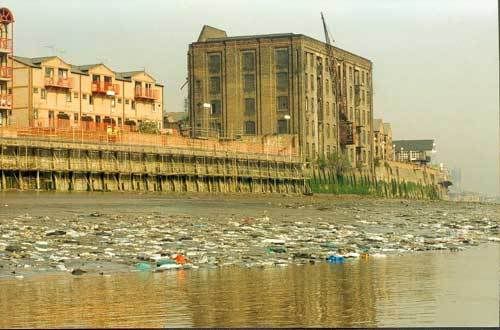
You will recall the scene in which Ricky and Jane watch recorded camcorder footage of plastic bag floating in the wind, which prompts Ricky to remark "sometimes there's just so much beauty in the world that I feel my heart is going to cave in." So--was it, in fact, beautiful? My professors argued that it was most emphatically NOT beautiful. Their logic was quite traditional, and I'm sure William Morris would have agreed with them: Is a plastic bag beautiful? Well, I suppose not. Is a dirty city street beautiful? Um, no. Is garbage floating in the wind beautiful? Definitely not.

John Keats once wrote "beauty is truth, truth beauty. That is all ye know on Earth and all ye need to know." If you take Keats at his word, this can cause some problems. Are pictures of Auschwitz beautiful? Most emphatically not, in my view. Nevertheless, his statement on art has become more or less the maxim for modern art. Most modern art today is concerned with pursuing the "truth" no matter how brutal or ugly it may be. So, while I respect Keats' writing and am a huge fan of his poetry, for the moment I think I'll except the dictionary definition of beauty as the "combination of qualities that make something pleasing and impressive to look at, listen to, touch, smell, or taste." If I accept that definition of beauty, then I think it's fair to say that the plastic bag floating in the wind doesn't exactly add up to a beautiful moment.

Is this beautiful?

So, why does the plastic bag scene always bring tears to my eyes? Maybe the reason I cry during that scene is because I actually feel sorry for Ricky and Jane because that garbage floating in the street is as close as they can get to beauty. What do you think? Is the garbage beautiful? I would love to delve into this issue further in the future.

Monday, February 4, 2008

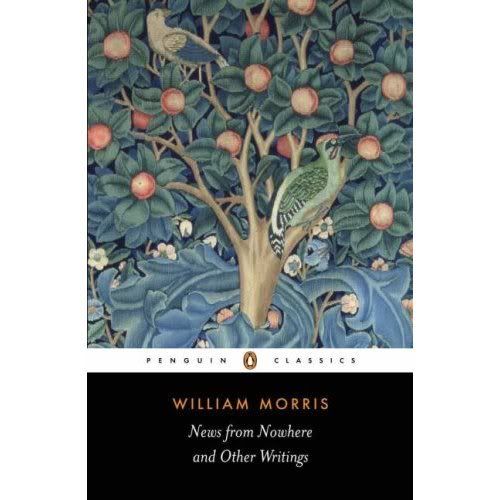
News from Nowhere by William Morris


We watched the Superbowl with friends on Sunday, and I have to say that betting on games certainly makes them more exciting! (my husband I wagered a hot chocolate from Starbucks, not exactly high stakes, but enough to keep me interested). I won our little bet (which sort of made me sad--the Patriots have such nice uniforms), but that's life.

This week promises to be quite busy. I am trying to get as much work done on my thesis, but blogging is so much more fun! I'm also trying to make time to read News from Nowhere, William Morris' Utopian novel. So far it's very intersting. It's the first futuristic fantasy I've ever read where the future is neither an apocalyptic nightmare, nor a science fiction inspired workers paradise where machines do everything for us. I guess it's somewhat predictable that Morris envisions a future that looks a lot like the 15th century! All work is creative and pleasurable and people work for the pure joy they take in their labour, rather than for pay. It's a beautiful idea, though I'm not quite sure how it would translate into real life.

The story, set in our time (approximately--they have bridges that were built in 2002 that are supposed to be new) offers a totally different vision of the future than I've ever found in other science fiction, or even in Utopian fantasies. For Morris, the ideal society is pretty much like it was in the Middle Ages, except without a government to spoil everything. People continue to work hard, but they do labour that they enjoy and try to keep the land in as pristine a state as possible (everyone lives in cottages with little gardens. Morris certainly envisioned sustainable architecture as part of his vision of the future--as little land as possible is used and the city of London has basically been allowed to return to the wild, with trees growing where the largest suburban areas of Morris' day were located). Everyone is also well fed and there doesn't seem to be much competition (except over who can produce the most beautiful handicrafts).

Morris wrote News from Nowherein response to Edward Bellamy's Looking Backward: 2000-1887set in roughly the same time period in the future. Bellamy's book took a totally opposite view of the future that is more familiar to today's science fiction readers. In Bellamy's socialist utopian future, technology has led to drastically reduced working hours for and developments like community kitchens for busy housewives help lighten the work load. Everyone retires with full benefits at age 45 (see Wikipedia).

William Morris couldn't stand Edward Bellamy's concept of the future (which is still, I would argue, the prevailing view of where technology is leading us--even though most inventions just leave us with more work to do and less time to do it in). He felt that work was an important part of life and that what mankind really needed to do was to slow down and appreciate living. This reminds me of another great book I took a look at this weekend:In Praise of Slow:How a Worldwide Movement is Challenging the Cult of Speed, by Carl Honoré. The author basically argues that Western society's (and it's not just the West!) obsession with speed has caused us to lose out on a lot of the basic pleasures of life--food, love, leisure, etc. I think he would probably agree with Morris that work is not man's curse, it's the lack of pleasure that we so often take in what we do.

Hmm. Well, that's all for now! I will try to remember to write a bit more about News from Nowhere when I get closer to finishing it!

Sunday, January 20, 2008

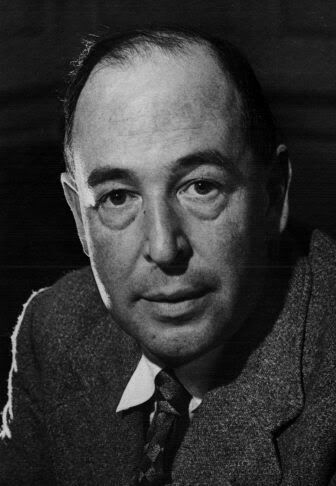
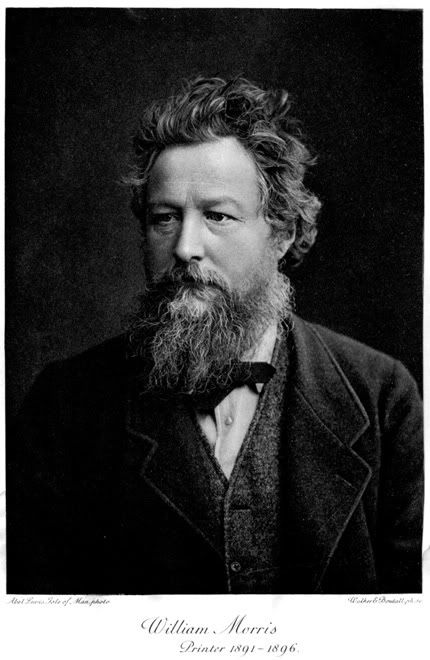
William Morris and C.S. Lewis


I am always surprised at how truly and deeply interconnected my interests are. The other day it occured to me to do a bit of research into the connections between William Morris and C.S. Lewis. I've been a great fan of Lewis since I first read The Chronicles of Narnia as a young girl. My interest in William Morris began somewhat later. While I was familiar with his designs and political philosophy from reading books on the Pre-Raphaelites, it was not until my third year in university that I picked up a lovely 1905 edition of his poem The Earthly Paradise at a used bookstore in Olympia, Washington. Since then I have been enamoured with his imaginative writing and impressed with his ability to create modern quest-type fantasies well before they became widespread during the 20th century. Like Lewis and Tolkien, Morris was steeped in Norse and Arthurian legend and he created beautiful and mysterious fantasy novels that have retained popularity among fantasy readers in spite of intense criticism. While Morris prose abilities may have been limited, one can only imagine what he may have been able to produce had he focused on a single enterprise (writing) rather than choosing to develop such a myriad of talents (writer, designer, political activist).

The connection between C.S. Lewis and George MacDonald is well known and has been explored by many writers. However, William Morris' fiction was an important influence on the work of both C.S. Lewis and J.R.R. Tolkien (Tolkien acknowledged Morris' The House of the Wolfings and The Root of the Mountains as inspiration for The Lord of the Rings).

Lewis first read William Morris after borrowing a copy of The Well at World's End from his good friend Arthur Greeves. In Lewis' correspondance with Greeves, Morris is mentioned more frequently than any other author besides George MacDonald (75 times!). In his autobiography, Surprised By Joy, Lewis writes that Morris was his "great author" throughout his youth (source: The Cumberland River Lamp Post). C.S. Lewis later wrote two lectures on the subject of William Morris in which he defended Morris against his literary critics, arguing that "even the sternest of theories of literature cannot permanently supress an author who is so obstinately pleasurable" (source: J.P. Leishman, "Rehabilitation and Other Essays" The Review of English Studies, 1940). It has also been suggested by Robert Boenig that the character of Prince Caspian was in fact based on Morris' Child Christopher (link to article).

I'm excited to do some more research on the connections between Morris and Lewis. I've ordered an essay by Bruce Edwards entitled "Toward a Rhetoric of Victorian Fantasy Criticism: C. S. Lewis's Readings of George MacDonald and William Morris" which I hope to read very soon. I can't wait to share my findings!

Thursday, January 17, 2008

William Morris and The Revival of Handicraft


This morning I've been reading an essay by William Morris entitled "The Revival of Handicraft" (which can be found in Morris: On Art and Design). It's a great inspirational work on the importance of the Craft Movement, written by Morris in 1888. I always find it amazing that over a hundred years ago, writers were already expressing concerns over what Morris calls "the giant fabric of commercialism"(197). One thing that always becomes apparent to me when looking at historical documents is that there truly is nothing new under the sun!

Some of the things he says in this essay sounds so strikingly familiar (and modern!) that it seems they could have been written yesterday:

"it is common now to hear people say of such and such a piece
of country or suburb: 'Ah! it was so beautiful a year or so ago, but it has been
quite spoilt by the building.' Forty years back the building would have been
looked on as a vast improvement; now we have grown conscious of the
hideousness we are creating, and we go on creating it" (195)


Well, a lot more than 40 years have gone by since Morris wrote that sentence, and it seems nothing has really changed in that regard since the time of Morris writing. We continue to erect vulgar buildings and create an endless supply disposable consumer goods and we no longer have the excuse that we are unaware of the consequences. On the contrary, we are well aware of the harm we cause, but continue to do the same in any event.

Morris worked his entire life to revive the arts and crafts of ancient England and to give them new life. He also managed to maintain cautious optimism concerning the future of the movement, arguing that "we are right to long for intelligent handicraft to come back to the world which it once made tolerable amidst war and turmoil and uncertainty of life"(195). He really saw the arts and crafts movement as a worthy cause in spite of his own culture's disinterest in reevaluating its priorities.

The England of Morris day was not that different from most places in the west today, though as I've said in previous blog entries, I think the Internet has really expanded the market for quality handmade goods and is making them more widely available. Perhaps there is still hope that "we can choose to forgo gross luxury and base utilitarianism in return for the unwearying pleasure of tasting the fullness of life (196).

Friday, January 11, 2008

Craft Research: Craft 2.0

I ran across a couple of great articles today on crafts and the "rebirth" of the Arts and Crafts Movement. craft research: Craft 2.0 is a great article that discusses how the handmade movement ("Craft 2.0") is sweeping the net with the help of organizations like Etsy (which is generating huge revenue--$4.3 million in November alone). I also ran across a neat post on Slow Cloth/Slow Craft by Debra Roby on Blogher. Both these articles were great, and I think they speak to the growing popularity of the handcraft movement.

As I noted in a comment on the Craft 2.o article, this likely means that the new craft movement will have a great deal more success than the original Arts and Crafts Movement. The reasons are fairly simple. While the leaders of the Arts and Crafts Movement hoped to convince the people of the beauty and quality of handmade objects, they faced a tremendous obstacle: that of price. Handcrafted objects made by Morris and Company were incredibly expensive to make and eventually became "status symbols" among the wealthy. Thus, a movement that began out of a desire to restore dignity to craftsmen and craftswomen by asserting their right to enjoy the crafting process was eventually reduced to a niche market populated by wealthy art patrons.

I am cautiously optimistic that the Craft 2.0 movement could change all this. The internet is far more accessible to people than William Morris "Morris and Company" shop ever was. And many of the goods available on sites like Etsy are incredibly affordable (check out Pink Purl, for example--Tracy offers tons of beautiful handcrafted art objects at very reasonable prices). I am so excited to see creative people finding avenues in which to sell their art without needing much of a "middle man"--I think it really speaks to the viability of this new movement. I believe people are naturally attracted to beautiful handmade objects. I think many will choose to "buy handmade" if quality handmade objects are available at affordable prices. Unfortunatley, that was never really possible during William Morris' time. Perhaps the time for handcrafts has come!

Tuesday, January 8, 2008

Poem on Grief

I ran across this poem by Ralph Waldo Emerson that has been really helpful to me (his poem "Threnody" is also a beautiful piece, written after the death of his son). Emerson was a founder of the transcendental movement and friends with Branson Alcott, father of writer Louisa May Alcott.

All Return Again
It is the secret of the world that all things subsist and do not die, but only retire a little from sight and afterwards return again. Nothing is dead; men feign themselves dead, and endure mock funerals and mournful obituaries, and there they stand looking out of the window, sound and well, in some new strange disguise. Jesus is not dead; he is very well alive; nor John, nor Paul, nor Mahomet, nor Aristotle; at times we believe we have seen them all, and could easily tell the names under which they go.
--Ralph Waldo Emerson

Thursday, December 20, 2007

Homemaking as Activism

I found this article on crafting through a link on the Buy Handmade website It was very interesting! "Craftivism: Is Crafting the New Activism?" http://www.columbiachronicle.com/paper/arts.php?id=2251

A few years ago, the feminist movement generally dismissed traditional women's work as "anti-feminist" and encouraged women to find "meaning" in their lives by pursuing careers and activities outside the home. That is beginning to chance, and today, third-wave feminists are returning to activities that have been traditionally labled as feminine (knitting, sewing and other crafts) and arguing that these activities are important as well. How refreshing! If you follow this idea to its natural conclusion, it also means that homemaking can also be celebrated by feminists as a valuable, viable career choice. If crafting can be activism, can't homemaking be a form of activism too?

One of the problems with the early feminist movement was that it discounted the value of traditional feminine pursuits. While first and second-wave feminists accomplished a great deal we can all be thankful for, it doesn't mean that feminism can't evolve! I learned about this from my own mom. She taught my sister and I that we could pursue any career we desired, though she had chosen to be a career homemaker and home-educator. I never saw this as being at all self-contradictory. I really admired her growing up and I hope to one day follow in her footsteps.

Have you ever read Laurel's Kitchen? It's a vegetarian cookbook that, along with my mom's example, laid the groundwork for many of my attitudes towards homemaking. It came out in the mid-1970s and the book's attitude towards being a wife and mother is incredibly positive. In the original edition the author begins by describing her disappointment with the junk food she'd been feeding her kids. After meeting Laurel she follows her around for months picking up on her cooking techniques as well as a wholistic philosophy of homemaking. The book has a heavy emphasis on the importance and value of giving our families healthy, "slow," food. While I'm not a vegetarian, I find that I still take the book of the shelf on a regular basis just to remind myself that caring for other people is a valuable goal in life (interestingly, I just noticed that Carol Flinders, co-author of Laurel's Kitchen has written a book called Rebalancing the World: Why Women Belong and Men Compete and How to Restore the Ancient Equilibrium interesting! I'm putting it on my wishlist).

I'm glad to see that these ideas seem to be getting more attention. Perhaps more of todays women will fight to have the value of their traditional crafts and activities recognized!

Sunday, December 16, 2007

Morris on Art and Design

I picked up a great book at the library on Friday. Morris: On Art and Design, edited by Christine Poulson. It's a great little collection of William Morris' letters and essays. If you are at all interested in the details of the work done by Morris and Company, the book has tons of info on the process of natural dyeing, glass making and a number of other crafts.

I found this quote from Ruskin's Unto This Last (1860) particularly inspiring:

"THERE IS NO WEALTH BUT LIFE. Life, including all its powers of love, of joy, and of admiration. That country is the richest which nourishes the greatest number of noble and happy human beings; that man is richest who, having perfected the functions of his own life to the utmost, has also the widest helpful influence, both personal, and by means of his possessions, over the lives of others. "

Well, I'm not so sure about "widest influence" bit--personally I think a rich influence on the lives of a few people can be just as vital--but I love the overall sentiment.

Thursday, December 13, 2007

More on William Morris' Philosophy...

"If I were asked to say what is at once the most important production of Art and the thing most to be longed for; I should answer; A beautiful house; and if I were further asked to name the production next in importance and the thing next to be longed for; I should answer; A beautiful book. To enjoy good houses and good books in self-respect and decent comfort, seems to me to be the pleasurable end towards which all societies of human beings ought now to struggle."
~William Morris

Well, there you have it from the man himself! Morris' mania for beautiful things is well documented. And it's no secret that books and houses were two of his chief obsessions. As a designer, writer and publisher, he devoted himself to human comfort and education. But is he being a bit excessive to argue that human beings ought to "struggle" so that people can enjoy beautiful houses and books "in self-respect and comfort." Is Morris going a little over the top here? Shelter and an education are important, to be sure--but why the emphasis on comfort and beauty? And are these things really significant enough to fight for?

This is a difficult question. While Morris is widely recognized as an early socialist thinker, I would think that many socialists would have a difficult time with his emphasis on beauty and comfort. Many would read a quote like this and say to themselves, “why should I bother with a beautiful home and collecting possessions like books? How bourgeois!”

Today Morris' impassioned idealism seems almost quaint when he argues that “all societies of human beings ought now to struggle” in order “to enjoy good houses and good books in self-respect and decent comfort.” But is Morris talking about having a gorgeous McMansion to show off and a showy bookshelf? Morris’ philosophy of life was rooted in the writings of John Ruskin. Ruskin argued that modernity had turned a whole class of people--the working class---into something less than human beings. For Ruskin, the assembly line was the nadir of human innovation, reducing a group of people into mere cogs in the wheel of society (this is one of the important distinctions features of Morris' and Ruskins' political philosophy--it was socialist, not communist, and placed tremendous weight on the importance of the individual). Morris and Ruskin felt human beings deserved work that gave them a feeling of distinction and pride, rather than treating them as yet another machine required in order to produce cheap, shoddy, production-line goods.

If you've ever worked a summer flipping burgers, stuffing envelopes, or doing similar monotonous work, you probably know what this feels like. Now, compare that feeling with your pride when you've produced a beautiful piece of needlework, cooked a fabulous meal, or finished another satisfying project. Pretty different, eh? And while our protestant work ethic society tries to tell us that we should feel satisfied and proud in our minimum wage jobs, we somehow still can sense the difference.

Work does not have to be "white collar" in order to produce a feeling of accomplishment (a day of landscaping might be as satisfying to some as a day in the office). In fact, it might be even more soul-killing than less "elevated" pursuits (cooking dinner). A beautiful home does not need to be extravagent. Indeed, a remarkably simple home was what Morris advocated most. The important thing is that one's house/apartment/room is comfortable and satisfying. It should be a place that reflects your personal values and makes you feel proud of your accomplishments.

The same should be true of one's books. I will take this idea one step further and argue that this also applies to one's education. Books were one's education, for the most part, in Morris' day, so I don't think it's too much of a stretch to argue that our children deserve to be educated in an environment where we are respected and treated with dignity. Unfortunately, far many schools, highschools and universities treat their students as a means to an end. Children are taught not to expect too much from their lives and unversity students are urged to choose careers that "fill the market's needs" rather than one that satisfies their own longings for personal development.

Is Morris being a trifle idealistic? Perhaps, but that's what I like best about him. And I'm willing to join in the struggle for self-respect and comfort!